

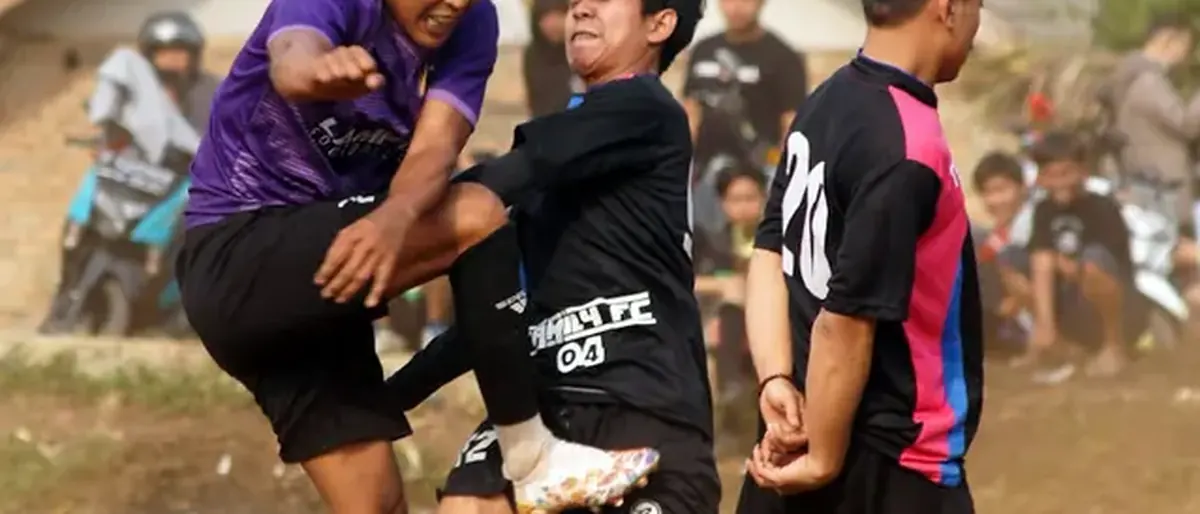
When you watch Leeds United under Daniel Farke, the first thing that hits you isn't just the pace of attack—it's the ferocity of the chase after the ball is lost. Within seconds of a turnover, you'll see a swarm of white shirts collapse on the opposition, forcing errors, winning second balls, and turning defense into attack in a single heartbeat. This isn't accidental chaos; it's a drilled, repeatable system built on specific training principles. If you want to understand how Farke's Leeds regains possession so effectively, you need to look at the counter-pressing drills that make it possible.
The philosophy is straightforward: the moment you lose the ball, the nearest player becomes the first defender. But execution requires precise triggers, coordinated movement, and relentless conditioning. Below, I break down core drills that reflect the mindset Farke instills at Thorp Arch—drills any coach can adapt for their own squad.
The 3-Second Reaction Drill
This is a foundational exercise. Set up a 20x20 yard grid with two teams of four. The ball starts with one team, and the coach calls "switch" randomly. On the call, the team in possession must immediately attempt to keep the ball, while the other team sprints to counter-press within three seconds.
Key coaching points:
- The nearest player to the ball carrier must close down at 100% intensity, cutting off the forward pass.
- The second and third nearest players shift to block passing lanes to the side and backward.
- If the ball isn't won within three seconds, the drill resets—players learn that hesitation is fatal.
The 4v4+2 Rondo with Transition Triggers
Rondos are a staple at Leeds, but Farke's version adds a specific counter-pressing layer. In a 15x15 yard area, four attacking players keep possession against two defenders. Four additional attackers wait outside the grid. When a defender wins the ball or forces a pass out of play, the attackers inside immediately sprint to the nearest sideline, and the four outside players enter to counter-press.
Why it works:
- It simulates the real-game scenario where possession changes instantly.
- The "escape" to the sideline replicates the opponent's first instinct to clear the ball under pressure.
- Players develop spatial awareness—knowing exactly where to run to cut off passing options.
The 3-Zone Pressing Grid
Divide the pitch into three horizontal zones: defensive third, middle third, and attacking third. The drill starts with the goalkeeper playing a ball to a defender in the defensive third. The attacking team (Leeds shape) presses in waves, but the trigger changes based on the zone.
Zone triggers:
| Zone | Trigger | Action |
|---|---|---|
| Defensive third | Goalkeeper passes to a full-back | Forwards and wingers press the full-back and center-back simultaneously |
| Middle third | Opponent plays a square pass across midfield | Midfielders step to the ball, wingers tuck inside |
| Attacking third | Opponent receives with back to goal | Nearest striker presses from behind, midfielders cut off the backward pass |
This drill teaches players to read the game situationally. In the attacking third, the press is more aggressive because a turnover can lead to a shot on goal. In the defensive third, the priority is to funnel the opponent toward the sideline rather than win the ball immediately.
The 5v5+3 Transition Game
This is a match-realistic drill often used in Farke's training. Set up a 40x30 yard area with two teams of five and three neutral players. The neutrals always play for the team in possession. The rule is simple: within three seconds of losing the ball, the team must win it back or concede a goal (the neutrals score if they complete five passes after a turnover).
What this builds:
- Collective responsibility: every player knows that a lost duel means the whole team must react.
- Physical conditioning: players regularly cover significant distances per match, and this drill replicates the high-intensity bursts needed for counter-pressing.
- Decision-making under fatigue: the drill runs for 8-minute intervals with 2-minute rests, mimicking the second-half drop-off that Leeds must avoid.

The Wide-Play Trap
Leeds frequently funnels opponents toward the touchline before springing the trap. This drill replicates that. In a 30x20 yard channel along the sideline, two defenders press a winger and overlapping full-back. The objective is to force a pass back to the center-back or goalkeeper.
Execution steps:
- The nearest midfielder angles his run to block the inside pass.
- The full-back steps up to press the winger, forcing him toward the sideline.
- The center-back shifts across to cover the space behind the full-back.
- The second midfielder cuts off the backward pass to the central defender.
The 2v2+1 Recovery Circuit
This drill focuses on individual duels and recovery runs. Two attackers face two defenders in a 10x10 yard box, with a neutral player supporting the attackers. When the defenders win the ball, they must immediately play to a target player 20 yards away while the attackers sprint to block the pass.
Why it matters:
- It trains the "second effort" after losing the ball.
- It builds the habit of immediate sprint recovery rather than jogging back.
- It develops the physical capacity to repeat high-intensity efforts—essential for a team competing in the Premier League.
Integrating the Drills into Match Preparation
Farke typically runs a 15-minute counter-pressing block at the start of every training session, followed by small-sided games that reinforce the principles. The final 20 minutes are dedicated to set-piece scenarios where counter-pressing is critical—particularly after corner kicks, where a turnover can leave the team exposed to counter-attacks.
Pro tip for coaches: Film every counter-pressing session and review it with players the next day. Show them the moments when the press worked perfectly (e.g., forcing a goalkeeper error) and when it broke down (e.g., a midfielder failing to track a runner). At Leeds, video analysis is as important as the drills themselves.
Common Mistakes and How to Fix Them
Even with rigorous training, counter-pressing can fail. Here are three frequent errors and their corrections:
- Over-committing: Players chase the ball in a straight line, leaving gaps behind. Fix: Teach the "angle of approach"—the first presser should arrive at an angle that blocks the forward pass while allowing the second defender to cover the cutback.
- Lack of communication: Two players press the same opponent, leaving a free man. Fix: Assign a "press caller" (usually the defensive midfielder) who decides which player pressures and which covers space.
- Fatigue-induced hesitation: Players stop sprinting after 60 minutes. Fix: Incorporate counter-pressing drills into the final 15 minutes of training when players are already tired—this builds mental and physical resilience.
Conclusion: The Checklist for Counter-Pressing Success
If you're building a counter-pressing system like Farke's at Leeds, use this checklist to evaluate your training sessions:
- Every drill includes a three-second reaction trigger
- Players practice zone-specific pressing triggers
- Transition drills are run at match intensity
- Wide-play traps are rehearsed weekly
- Video review follows every counter-pressing session
- Conditioning drills replicate second-half fatigue
For more on Farke's tactical approach, read our analysis of Farke's pressing tactics and how his rotation strategy differs between the Championship and Premier League. If you're interested in how these principles could apply to a European campaign, check out our piece on rotation for European ambitions.