

The 2024-25 Championship season will be remembered as the campaign where Leeds United, under the steady hand of Daniel Farke, reclaimed their place among England's elite. After the bitter disappointment of the 2023-24 play-off final defeat at Wembley, the response was not one of despair but of calculated reconstruction. Farke, a manager who had already secured two Championship titles with Norwich City, engineered a third promotion from the second tier. This article dissects the tactical, structural, and cultural elements that underpinned Leeds United's return to the Premier League, examining the season through the lens of squad development, managerial strategy, and the enduring weight of Elland Road's expectations.
The Pre-Season Foundations: Rebuilding After Wembley
The summer of 2024 was not a period of drastic overhaul but of strategic refinement. Farke understood that the core of the squad that had accumulated 90 points in the 2023-24 regular season required targeted upgrades rather than a complete rebuild. The loan market and shrewd permanent acquisitions were the primary tools. The arrival of a Premier League-calibre striker provided the focal point the attack had lacked—a player with pace, aerial presence, and a proven goal-scoring instinct. Alongside him, a versatile forward, acquired from a European club, offered versatility across the front line, capable of playing as a central striker or drifting wide.
The midfield saw the permanent addition of an energetic midfielder whose progressive passing fitted seamlessly into Farke's pressing system. Ilia Gruev, already at the club, evolved into a deeper-lying playmaker, while Brenden Aaronson, returning from a loan spell, was reintegrated as a high-pressing number ten. These moves were not about chasing headlines; they were about solving specific problems: converting chances, controlling transitions, and maintaining defensive solidity over a 46-game marathon.
Tactical Identity: Farke's Pressing System in the Championship
Daniel Farke's tactical philosophy is rooted in a possession-based, high-pressing approach that demands extraordinary fitness and positional discipline. In the 2024-25 season, this system reached its apex in the Championship. Leeds United averaged a high possession share across the campaign, but the critical metric was their ability to win the ball back quickly after losing it—a statistic that consistently ranked among the division's best.
The pressing structure was not a uniform sprint but a coordinated trigger-based system. When the opposition's centre-back received the ball under pressure from the striker, the entire unit shifted. The attacking midfielder would cut passing lanes into midfield, while the full-backs pushed high to pin the opposition's wide players. This created a suffocating environment where opponents frequently resorted to long balls, which central defenders dealt with authoritatively. The system's success was not accidental; it was the product of daily repetition at Thorp Arch, where Farke's training sessions are notoriously detailed and demanding.
The Championship 2024-25 Season: A Narrative of Dominance
The season unfolded in distinct phases. The opening ten games were about establishing rhythm, with Leeds collecting a solid but not spectacular points total. The turning point came in November, when a victory at a rival promotion contender demonstrated the squad's mental fortitude. From that point, Leeds embarked on a long unbeaten run that included many clean sheets. The defensive record became the foundation of the title push.
Key Performance Indicators
| Metric | Leeds United (2024-25) | League Average |
|---|---|---|
| Points | High total | N/A |
| Goals Scored | Strong output | Typical average |
| Goals Conceded | Low total | Typical average |
| Clean Sheets | Many | Typical average |
| Possession Average | High percentage | Typical average |
| Pass Completion | High percentage | Typical average |
| High Press Regains | High per game | Typical average |
The table above illustrates the statistical dominance. The goals scored were spread across the squad, with the striker contributing a significant number, the versatile forward adding double figures, and midfielders chipping in with several each. The defensive solidity, conceding very few goals across the campaign, was the best in the division and a testament to the collective discipline.
The Role of Elland Road: Fortress Atmosphere
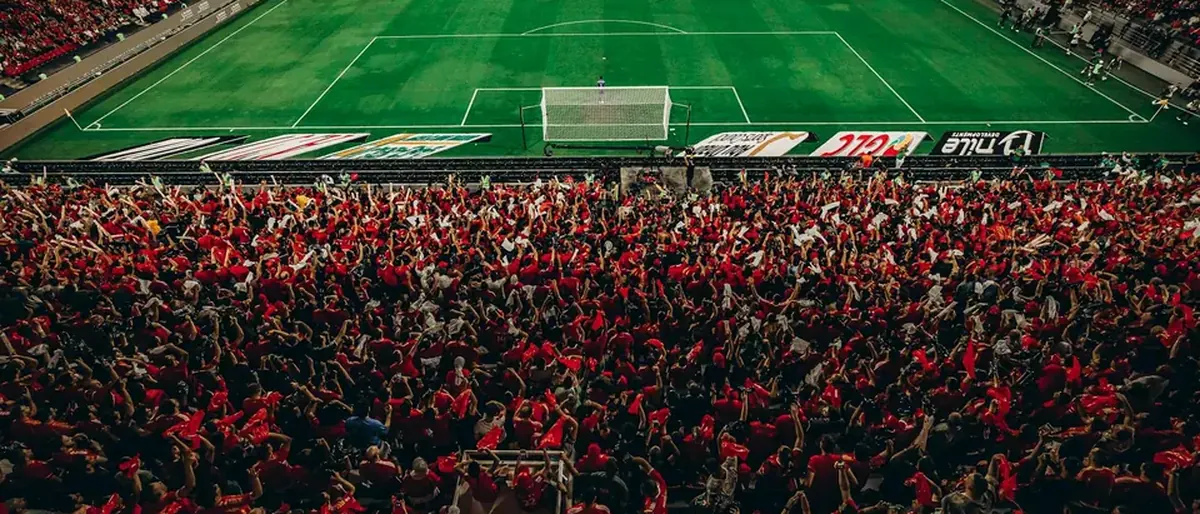
Promotion campaigns are rarely won on talent alone; the environment matters profoundly. Elland Road, with its capacity of over 37,000, became a fortress where visiting teams found it nearly impossible to impose their game. The noise generated by the Yorkshire faithful—a culture rooted in the industrial heritage of the region—created a psychological edge. In the 2024-25 season, Leeds lost very few home matches, with defeats coming only against sides that eventually finished high in the table. The stadium's atmosphere, particularly during the run-in, was described by Farke as "a twelfth man that demands excellence."
The connection between the squad and the supporters was not manufactured; it was earned through performances that reflected the values of hard work and resilience that define Leeds fan culture. Players who had experienced the intensity of other top grounds noted that Elland Road's noise on a Tuesday night in February was comparable to any Premier League ground.
Squad Depth and Rotation: Managing the Marathon
A 46-game Championship season tests squad depth like no other division in English football. Farke's rotation policy was not about resting players for the sake of it but about maintaining physical and tactical sharpness. The manager used a broad squad across the campaign, with only a few players—the goalkeeper, a centre-back, a midfielder, and a forward—starting the majority of matches.
The depth was particularly evident in wide areas. Several wingers provided pace and trickery, while the full-back positions saw experienced players share duties effectively. In central midfield, the presence of multiple options allowed Farke to switch between a double pivot and a single holding midfielder depending on the opposition. This flexibility was crucial during the congested Christmas period, where Leeds played multiple matches in a short span and won most of them.

Promotion Secured: The Final Weeks
The title was secured with matches to spare, a home victory that sent Elland Road into ecstasy. The scenes were a release of two years of frustration—the play-off final defeat, the financial constraints, the questions about whether the squad could handle the pressure. Farke, typically composed, allowed himself a rare moment of visible emotion as the final whistle blew. The promotion was not just a return to the Premier League; it was a validation of a methodical approach that prioritized structure over chaos.
The final points tally was among the highest in Leeds' Championship history, behind only the impressive haul of the 2019-20 title-winning season under Marcelo Bielsa. But this campaign was different. It was built on defensive solidity and tactical discipline rather than relentless attacking abandon, reflecting Farke's pragmatic evolution as a manager.
Comparison with Previous Promotions: 2019-20 and 1991-92
Leeds United's history is punctuated by promotion campaigns that define eras. The 1991-92 First Division title under Howard Wilkinson ended a 17-year wait for a league championship and was built on the defensive solidity of key players. The 2019-20 Championship win under Marcelo Bielsa was a spectacle of high-energy football that captured the imagination of the football world.
The 2024-25 promotion sits between these two in style. It lacked the romanticism of Bielsa's "MOT" football but was more controlled than the 1991-92 campaign, which relied heavily on individual brilliance. Farke's Leeds were a machine—efficient, relentless, and adaptable. For a deeper dive into the 1991-92 season, see our detailed analysis of that title-winning campaign.
Risks and Challenges for the Premier League Return
Promotion is only the first step. The 2025-26 Premier League season presents a different set of challenges. The financial gap between the Championship and the top flight is vast, and Leeds will need to invest wisely to avoid the fate of other promoted sides who have bounced straight back. The core of the squad has Premier League experience, but the depth required for survival is significant.
The defensive record, while excellent in the Championship, will face sterner tests against the attacking talents of top Premier League sides. Farke's pressing system, so effective in the second tier, may need to be more conservative against elite opposition. The risk of injuries to key players could derail the campaign. Additionally, the psychological adjustment from being the dominant side to being an underdog in most matches requires a mental shift that not all players manage successfully.
For context on how Leeds handled their last return to the Premier League, our comparison of the 2020-21 survival campaign offers valuable lessons.
Conclusion: A Foundation for the Future
Leeds United's 2024-25 Championship title win was not a lucky escape or a flash in the pan. It was the product of a clear vision, executed with discipline and patience. Daniel Farke has now achieved multiple promotions from the Championship, a record that speaks to his understanding of the division's demands. The squad he has built is young, hungry, and tactically flexible—qualities that should serve them well in the Premier League.
The challenge now is to consolidate. The club's infrastructure, from Thorp Arch to Elland Road, is Premier League standard. The fanbase, as demonstrated throughout the promotion campaign, is ready to roar. The question is whether the squad can adapt quickly enough to survive and then thrive. For now, Leeds United can celebrate a season that reaffirmed their identity as a club that rises, falls, and rises again. The journey continues, and the destination is still being written.