

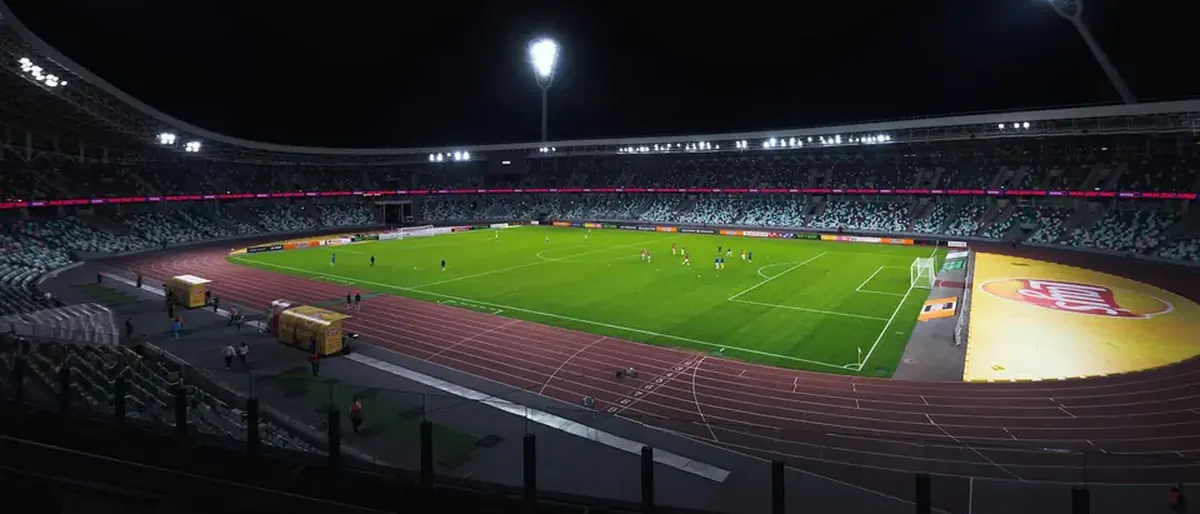
In the pantheon of English football, few clubs possess a narrative as layered with triumph, tragedy, and transformation as Leeds United. The club's three First Division titles—secured in 1968/69, 1973/74, and 1991/92—represent more than silverware; they are the architectural blueprints of two distinct footballing philosophies that continue to echo through the corridors of Elland Road. To understand Leeds United today—its pressing identity under Daniel Farke, the academy ethos at Thorp Arch, and the fervent Yorkshire fan culture—one must first trace the lineage back to the two men who defined the club's championship DNA: Don Revie and Howard Wilkinson.
The Revie Revolution: Building a Dynasty from Ashes
When Don Revie took charge of Leeds United in March 1961, the club languished in the Second Division, drawing average attendances below 15,000 at a dilapidated Elland Road. Revie, a former Manchester City and England forward, inherited a squad with limited resources but possessed an unshakeable conviction about how the game should be played. His vision was methodical, almost obsessive, and it transformed Leeds from provincial also-rans into the most feared side in English football.
The 1968/69 Championship: Perfection Through Pragmatism
The 1968/69 season stands as Leeds United's statistical masterpiece. Revie's side amassed 67 points from 42 matches—a record under the two-points-for-a-win system—losing only twice all campaign. The defensive foundation was impenetrable: goalkeeper Gary Sprake, full-backs Paul Reaney and Terry Cooper, and the legendary central defensive partnership of Jack Charlton and Norman Hunter conceded just 26 goals. Yet this was no mere defensive outfit. The midfield engine room of Billy Bremner and Johnny Giles provided relentless energy and creative incision, while Allan Clarke's predatory finishing yielded 18 league goals.
What distinguished this Leeds side was its tactical flexibility. Revie employed a 4-2-4 formation that could morph into 4-3-3 or even 4-5-1 depending on the opposition. The famous "Revie Plan" involved meticulous scouting reports, set-piece routines rehearsed endlessly at the club's training ground, and a psychological edge that bordered on intimidation. Opponents dreaded visiting Elland Road, where the crowd's intensity matched the team's aggression.
The 1973/74 Championship: The Final Statement
Five years later, Revie's Leeds reached their apex. The 1973/74 campaign saw the club claim the title with 62 points, losing only four matches. This iteration of the team was more direct, more physically imposing, and arguably more complete. The emergence of Peter Lorimer—whose shooting power earned him the nickname "Hot Shot"—added a new dimension, while the midfield creativity of Eddie Gray and the defensive resilience of Gordon McQueen ensured continuity.
The 1973/74 title was Revie's farewell gift to the club. By July 1974, he had accepted the England manager's position, leaving behind a squad that had won two league titles, an FA Cup, a League Cup, and reached European finals. The legacy was complex: Revie's Leeds were simultaneously admired for their footballing intelligence and reviled for their physicality. Yet the numbers speak clearly: under Revie, Leeds never finished outside the top four in the First Division between 1964/65 and 1973/74.
| Season | Position | Points (2 pts/win) | Goals For | Goals Against | Key Players |
|---|---|---|---|---|---|
| 1968/69 | 1st | 67 | 66 | 26 | Bremner, Giles, Charlton, Clarke |
| 1973/74 | 1st | 62 | 66 | 31 | Bremner, Lorimer, Giles, Hunter |
The Wilderness Years: Decline and Resurrection
Following Revie's departure, Leeds entered a period of gradual decline. The club yo-yoed between the First and Second Divisions, suffering relegation in 1981/82 and again in 1989/90. The Elland Road terraces, once a fortress of championship ambition, now witnessed the frustration of a sleeping giant. Attendances dipped, financial constraints tightened, and the club's identity fragmented. For a generation of supporters born after Revie's era, the championship glory became folklore rather than lived experience.
The Wilkinson Renaissance: Forging a Modern Champion
Howard Wilkinson arrived at Leeds United in October 1988, inheriting a club in the Second Division with a fractured dressing room and limited resources. Wilkinson was the antithesis of Revie's flamboyance—a pragmatist, a disciplinarian, and a meticulous organizer who believed in structure above flair. His background in youth development at Sheffield Wednesday and his reputation as a tactician who could maximize limited budgets made him the ideal candidate to rebuild Leeds from the ground up.
The 1989/90 Promotion: The Foundation
Wilkinson's first full season, 1989/90, delivered promotion back to the First Division. The squad was a blend of experienced heads—Gordon Strachan, signed from Manchester United for £300,000, provided leadership and creativity—and emerging academy products. The 2-0 victory over Bournemouth on the final day secured second place and a return to the top flight. But Wilkinson understood that survival required more than momentum; it required a structural overhaul.
The 1991/92 Championship: Tactical Discipline Meets Academy Pride
The 1991/92 season remains one of the most remarkable championship victories in English football history. Leeds United won the final First Division title before the creation of the Premier League, finishing four points clear of Manchester United. Wilkinson's side accumulated 82 points from 42 matches, losing only six times. The goal tally of 72 was the division's highest, while the defensive record of 38 goals conceded was among the best.

The tactical framework was built on a 4-4-2 formation that emphasized width, set-piece efficiency, and counter-attacking speed. The full-backs—Tony Dorigo and Mel Sterland—provided overlapping runs that stretched defenses. The central midfield pairing of Gary McAllister and David Batty offered contrasting qualities: McAllister's passing range and dead-ball expertise complemented Batty's tenacious ball-winning. Up front, Lee Chapman's aerial prowess combined with Rod Wallace's pace created a partnership that troubled every defense.
What made this championship particularly significant was its reliance on academy graduates. Gary Speed, David Batty, and Gary Kelly had all emerged from the Leeds youth system, embodying Wilkinson's commitment to developing homegrown talent. The academy at Thorp Arch, which Wilkinson had restructured, began producing a steady stream of first-team players that would sustain the club for years.
| Season | Position | Points (3 pts/win from 1981) | Goals For | Goals Against | Key Players |
|---|---|---|---|---|---|
| 1991/92 | 1st | 82 | 72 | 38 | Strachan, McAllister, Batty, Chapman |
Comparing the Eras: Revie vs. Wilkinson
The two championship eras, separated by nearly two decades, reflect fundamentally different approaches to building a title-winning side. Revie's method was evolutionary, building through sustained investment in a core group of players over a decade. His Leeds side was defined by tactical innovation, psychological warfare, and a relentless pursuit of perfection that bordered on obsession. The 1968/69 and 1973/74 teams were products of a manager who controlled every aspect of the club, from team selection to kit design.
Wilkinson's approach was revolutionary in a different sense. Operating under financial constraints, he rebuilt the club's infrastructure, emphasizing youth development and tactical discipline. His 1991/92 championship was a testament to organizational efficiency rather than individual brilliance. Where Revie's Leeds overwhelmed opponents with talent and intimidation, Wilkinson's Leeds outworked them with structure and resilience.
| Aspect | Revie Era (1961-1974) | Wilkinson Era (1988-1996) |
|---|---|---|
| Titles | 2 First Division, 1 FA Cup, 1 League Cup | 1 First Division, 1 Second Division promotion |
| Tactical Philosophy | Fluid 4-2-4/4-3-3, set-piece mastery | Structured 4-4-2, counter-attacking |
| Key Signings | Giles (£33,000), Clarke (£165,000) | Strachan (£300,000), McAllister (£1m) |
| Academy Output | Madeley, Cooper, Bremner (pre-Rivie system) | Speed, Batty, Kelly (Wilkinson system) |
| Legacy | European Cup finalists, FA Cup winners | Premier League foundation, academy blueprint |
The Risks of Replicating History
While the Revie and Wilkinson eras offer valuable lessons, attempting to replicate their success in the modern game carries significant risks. The financial landscape of football has transformed beyond recognition. Revie built his dynasty through patient investment and player retention; today's transfer market makes such continuity nearly impossible. Wilkinson's reliance on academy graduates, while admirable, requires a development system that can produce first-team talent consistently—a challenge that even elite clubs struggle to meet.
The 2025/26 Premier League campaign under Daniel Farke illustrates these tensions. The squad contains promising academy products and experienced signings, but the competitive pressures of the top flight demand immediate results. The pressing system that served Farke so effectively in the Championship may require adaptation against more technically sophisticated opponents. The gap between historical championship formulas and contemporary realities is wider than ever.
Conclusion: The Enduring Blueprint
The championship eras of Don Revie and Howard Wilkinson remain the twin pillars upon which Leeds United's identity rests. Revie established the club as a force through tactical innovation and psychological intensity; Wilkinson restored its pride through structural discipline and youth development. Both understood that sustainable success requires more than a talented first XI—it demands a culture, a system, and a connection to the community.
As Leeds United navigates the challenges of the Premier League 2025/26 season, these historical foundations offer both inspiration and caution. The academy at Thorp Arch continues to produce talent. The Elland Road atmosphere remains among the most intimidating in English football. The Yorkshire fan culture, forged through decades of triumph and heartbreak, endures. But the path to another championship requires adapting these principles to a new era—one where financial prudence, tactical flexibility, and player development must coexist with the relentless demands of modern football.
For the latest updates on Leeds United's 2025/26 Premier League campaign, visit our latest news section. Join the discussion with fellow supporters in our fan forum, and explore the tactical evolution from Wilkinson to Farke in our detailed analysis.