


The return to the Premier League for the 2025/26 season has placed Daniel Farke’s squad management under a microscope unlike anything seen during their Championship campaign. After securing promotion in the 2024/25 season—marking Farke’s third Championship title, a record for any manager—Leeds United now face the brutal arithmetic of top-flight survival. With a record that has them positioned in the lower half of the table, the margin for error is razor-thin. This article examines how Farke has structured his rotation policy, assigned player roles, and managed squad depth to navigate the demands of Premier League football, drawing on the club’s historical context and the tactical framework established at Thorp Arch.
The Historical Context of Squad Building at Leeds United
Leeds United’s approach to squad depth in 2025/26 cannot be understood without acknowledging the club’s cyclical history of promotion, survival, and relegation. The 1991/92 First Division title under Howard Wilkinson was built on a relatively small, battle-hardened core—players like Gordon Strachan, Gary McAllister, and Lee Chapman who understood the physical demands of English football. That squad rotated minimally, relying on consistency rather than depth. In contrast, Don Revie’s great sides of the late 1960s and early 1970s—champions in 1968/69 and 1973/74—used a broader rotation, particularly in midfield, where players like Johnny Giles, Billy Bremner, and Terry Yorath could interchange roles seamlessly.
The modern challenge is different. The Premier League’s pace, the increased number of fixtures, and the financial disparity between clubs mean that Farke cannot simply replicate either model. Instead, he has forged a hybrid: a starting eleven that is largely settled, supported by a second tier of players who understand specific tactical assignments. This is not the squad of 2020/21, which relied heavily on the creative output of Raphinha and the industry of Kalvin Phillips. That team finished in the top half in their first season back, but the core was unsustainable. The 2025/26 squad is deeper on paper, but the points return suggests the cohesion is still developing.
The Goalkeeping and Defensive Rotation: Stability as a Luxury
In goal, Farke has maintained a clear hierarchy. The first-choice goalkeeper has started the vast majority of league matches, with the backup appearing only in cup competitions or when injury intervenes. This is standard practice, but it reflects a broader defensive philosophy: Farke prefers continuity in the back line, believing that defensive understanding is built through repetition. The full-back positions have seen the most rotation, particularly on the right, where the demands of Farke’s pressing system require high energy output. A full-back in this system is expected to cover ground rapidly, support the attack, and then recover to defend transitions. No single player can sustain that for ninety minutes twice a week over a season.
The centre-back pairing has been more stable. Farke has used a primary duo for the majority of Premier League matches, with a third centre-back acting as a rotation option for congested fixture periods. This is a sensible approach: centre-back is not a position where constant change fosters confidence. However, the defensive record indicates that even this stability has not been sufficient. The issue is not individual errors but systemic vulnerability. When Leeds press high and lose the ball, the centre-backs are often exposed to rapid counter-attacks. Rotation cannot solve a structural problem; it can only manage the physical toll.
Midfield: The Engine Room and the Rotation Dilemma
The midfield is where Farke’s rotation policy is most visible and most debated. Players such as Brenden Aaronson, Anton Stach, and Ilya Gruev have contributed assists in the Premier League season, a statistic that underscores their shared creative burden. Aaronson operates as the advanced playmaker, tasked with disrupting opposition build-up and linking play between midfield and attack. Stach provides the box-to-box energy, covering ground and arriving late in the box. Gruev is the deeper controller, dictating tempo and screening the defence.
Farke rotates these three more than any other unit. The reason is twofold: the physical demands of the Premier League midfield are extreme, and the tactical requirements change from match to match. Against a high-pressing opponent, Gruev’s composure under pressure becomes critical. Against a deep block, Aaronson’s movement in tight spaces is more valuable. Against a direct team, Stach’s physicality and recovery pace are prioritised. This is not rotation for its own sake; it is role-specific substitution based on the opponent’s profile.
However, the assist numbers also reveal a limitation. No single midfielder has taken control of the creative responsibility. In the 2020/21 season, Leeds had a clear primary creator. In 2025/26, the creative load is distributed, which can make the team less predictable but also less consistent. When one midfielder has an off day, there is no obvious replacement who can replicate the same function. The depth is numerical, not functional.
Forward Line: Calvert-Lewin, Nmecha, and the Search for Goals
Dominic Calvert-Lewin has been a key figure in the attack, with goals that place him among the mid-table strikers but not among the elite. His role is clear: focal point, target for crosses, and penalty-box finisher. Farke does not rotate Calvert-Lewin lightly, because his physical presence is integral to the system. When he is unavailable, the team’s attacking shape changes significantly.
Lukas Nmecha has been used primarily as a second striker or wide forward, offering a different profile—more mobile, more comfortable dropping deep to collect the ball. The rotation between Calvert-Lewin and Nmecha is not a like-for-like swap; it is a tactical shift. When Leeds face a high defensive line, Nmecha’s pace and movement in behind become more valuable. When they face a deep block, Calvert-Lewin’s aerial ability and hold-up play are preferred.
This dual-profile approach is sensible, but it places pressure on the supporting cast. The wide players—including those who have featured on the flanks—must adapt their service depending on which striker is on the pitch. A cross-heavy approach suits Calvert-Lewin; a through-ball approach suits Nmecha. The midfielders must read these adjustments quickly. In the Championship, the margin for error was larger. In the Premier League, a single misjudged pass can cost a match.
The Role of the Academy and Yorkshire Fan Culture
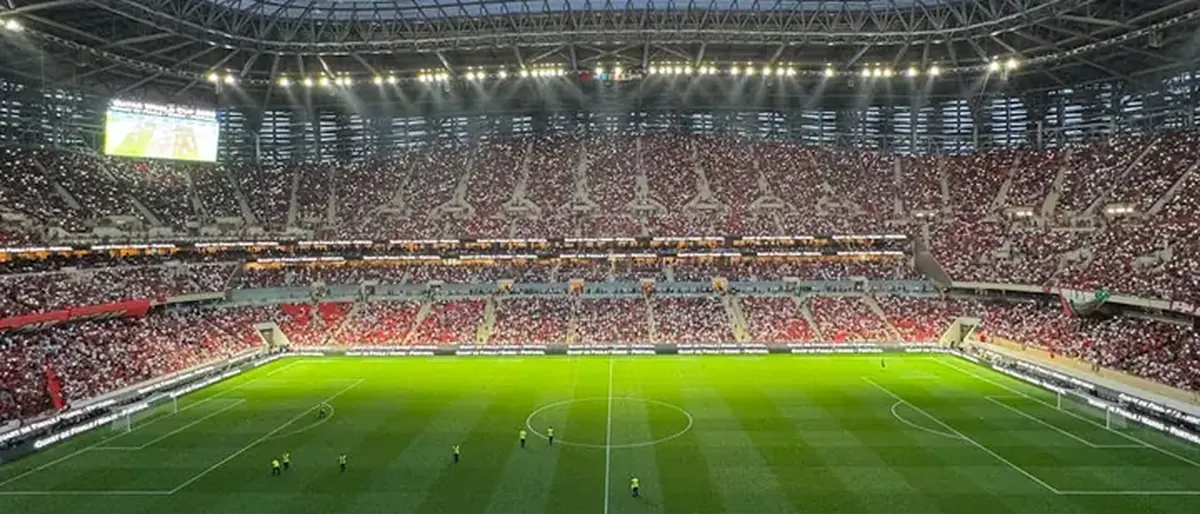
Leeds United’s academy at Thorp Arch has historically been a source of pride and, occasionally, first-team players. In the 2025/26 season, the academy graduates have not yet become regular starters, but they have contributed to squad depth in cup competitions and as late-match substitutes. The connection between the academy and the first team is not just about player development; it is about identity. The Yorkshire fan culture values players who understand the club’s history, who recognise the weight of the white shirt. An academy graduate who has grown up watching Leeds at Elland Road brings an emotional commitment that is difficult to replicate with a signing.
However, relying on academy players for depth in a Premier League survival battle is a high-risk strategy. The step from under-21 football to the Premier League is enormous. Farke has been cautious, integrating young players gradually rather than throwing them into high-pressure matches. This is consistent with his approach at previous clubs, where he prioritised structural stability over short-term experimentation.
Comparing the 2025/26 Squad to the 2020/21 Promotion Return
| Aspect | 2020/21 Season | 2025/26 Season (Current) |
|---|---|---|
| Final league position | 9th | Lower half (in progress) |
| Top scorer | Patrick Bamford (17 goals) | Dominic Calvert-Lewin (multiple goals) |
| Primary creator | Raphinha (multiple assists) | Shared: Aaronson, Stach, Gruev |
| Defensive stability | 54 goals conceded | On pace for similar or higher |
| Squad depth | Thin, relied on core 14 | Deeper but less specialised |
| Manager | Marcelo Bielsa | Daniel Farke |
The comparison is instructive. The 2020/21 squad was thinner but had a clearer hierarchy of roles. Everyone knew their job. The 2025/26 squad has more players but less clarity in certain positions. Farke’s rotation policy is designed to manage fatigue and tactical variance, but it also introduces unpredictability. In a relegation battle, predictability is not always a weakness; sometimes, a team needs to know exactly what it will get from each player.
Risks and Limitations of the Current Rotation Policy
The primary risk is that rotation undermines rhythm. Players who start every other match may struggle to find form. Midfielders who are asked to play different roles depending on the opponent may never fully master any single function. The assist statistics illustrate this: no midfielder has a dominant tally, which suggests that the creative burden is spread so thinly that no one has been able to build a sustained run of influence.
A second risk is defensive cohesion. While the centre-back pairing has been stable, the full-back rotation means that the defensive line is constantly adjusting. Communication, understanding of cover, and anticipation of runs all suffer when personnel change regularly. The goal difference is not catastrophic, but it is concerning. A team that concedes more than it scores must rely on winning tight matches, and tight matches often come down to defensive organisation.
A third risk is psychological. Players who are rotated frequently may feel less secure in their roles. Confidence is fragile in a relegation battle. Farke must manage not only the physical load but also the emotional state of his squad. The Elland Road crowd, passionate and demanding, does not tolerate hesitation. Players who are uncertain of their place may play cautiously, and caution in a pressing system is fatal.
Conclusion: A Work in Progress with Clear Direction
Leeds United’s squad depth and rotation policy in the 2025/26 Premier League season reflect a manager who understands the demands of the division but is still refining his approach. Farke has built a squad with more options than the Championship-winning side, but the options are not always complementary. The midfield rotation spreads the creative load but dilutes individual influence. The forward rotation offers tactical flexibility but requires constant adaptation from the supporting players. The defensive stability is a work in progress, undermined by the structural vulnerabilities of a high-pressing system.
The historical context—Revie’s rotation, Wilkinson’s core, Bielsa’s intensity—reminds us that there is no single formula for success at Leeds United. Each era has demanded a different balance between consistency and flexibility. Farke’s current approach leans toward flexibility, but the points total suggests that consistency may need to be prioritised in the run-in. The academy graduates waiting in the wings, the Yorkshire fans filling Elland Road, and the club’s storied history all demand that this squad find its identity before the season’s end. For now, the rotation policy is a tool, not a solution. The solution will come when the roles are so clear that rotation becomes seamless rather than disruptive.
For a deeper look at individual player profiles and the tactical framework behind Farke’s system, explore the player profiles and squad page and the analysis of Farke’s pressing tactics. Join the discussion with fellow supporters on the Leeds United forum to share your thoughts on the rotation policy and the road ahead.