
Editor’s Note: The following is a tactical analysis piece written in an educational case-study format. All scenarios, match outcomes, and player statistics are hypothetical constructs designed to illustrate tactical concepts. They do not reflect actual Premier League 2025/26 results or real-time data. Player roles are discussed within the context of a theoretical model under manager Daniel Farke.
Midfield Rotation Under Farke: The Tactical Roles of Ampadu, Gruev, and Tanaka
By The WACCOE Independent Tactics Desk
In the high-stakes environment of a Premier League relegation battle—where Leeds United currently find themselves in a hypothetical 2025/26 season—the midfield engine room is often the difference between survival and the drop. Under Daniel Farke, the Whites have adopted a system that demands both structural discipline and creative license from its central trio. The key to this balance lies in a carefully orchestrated rotation between three distinct profiles: the defensive anchor (Ethan Ampadu), the deep-lying connector (Ilya Gruev), and the progressive ball-carrier (Ao Tanaka).
This is not a static 4-2-3-1 where roles are fixed. Farke’s philosophy, honed during his Championship title wins and now tested in the top flight, relies on a fluid midfield that can shift between a double pivot and a single pivot depending on the phase of play. Understanding how Ampadu, Gruev, and Tanaka rotate within this framework reveals the tactical intelligence behind Leeds’ attempt to defy the odds.
The Theory: Three Phases, Three Functions
Farke’s midfield setup can be broken down into three distinct phases: build-up, transition (defensive), and possession in the final third. Each player has a primary function, but their roles are not rigid. The rotation is triggered by the position of the ball and the opposition’s pressing structure.
| Phase of Play | Ethan Ampadu (The Screen) | Ilya Gruev (The Metronome) | Ao Tanaka (The Catalyst) |
|---|---|---|---|
| Build-up (Own Half) | Drops between center-backs to form a back three. Offers short, safe passes to full-backs. | Drops deeper than Ampadu to receive from the CBs. First receiver under pressure. | Pushes high into the half-space, offering a vertical passing lane. |
| Midfield Transition (Defensive) | Holds position in front of the back line. Reads passes into the No.10. | Shifts laterally to cover the wide areas if a full-back is caught high. | Presses the opponent's deepest midfielder; triggers counter-press. |
| Final Third Possession | Rarely enters the box. Stays 20-25 yards out to recycle possession and prevent counter-attacks. | Acts as the "third man" runner into the box (late arrival). | Drifts to the left half-space to combine with the winger. Creates 2v1 overloads. |
Case Study: The Build-Up Phase Under Pressure
In a hypothetical match against a high-pressing side, Farke’s rotation becomes most visible. When the opposition striker engages Leeds’ center-backs, Ampadu does not simply sit in front of them. Instead, he drops between them, creating a temporary 3v2 numerical superiority against the first line of pressure. This is a classic Farke move—borrowed from his Norwich City days—but the personnel make it unique.
Gruev, in this scenario, does not drop as deep as a traditional regista. Instead, he positions himself slightly higher, offering a lateral passing option to the full-back. If the opposition winger steps up to press the full-back, Gruev receives the ball on the half-turn and immediately looks for Tanaka. The Japanese international is not static; he drifts from his central position to the left half-space, creating a diagonal passing lane that bypasses the first press.
This is the core of the rotation: Ampadu provides security, Gruev provides connectivity, and Tanaka provides penetration. If any one of these players is missing, the system loses its balance. For example, if Gruev is unavailable, Ampadu must take on more passing responsibility, which reduces his screening effectiveness. If Tanaka is absent, the team lacks the vertical drive to break lines.
The Defensive Transition: A Delicate Balance
The most vulnerable moment for Farke’s Leeds is the turnover. When possession is lost, the midfield must instantly reorganize. Ampadu’s role is to immediately retreat and form a barrier in front of the center-backs. He is not a destroyer in the mold of a traditional defensive midfielder; he is a positional anchor. His job is to slow down the attack, not necessarily to win the ball back.
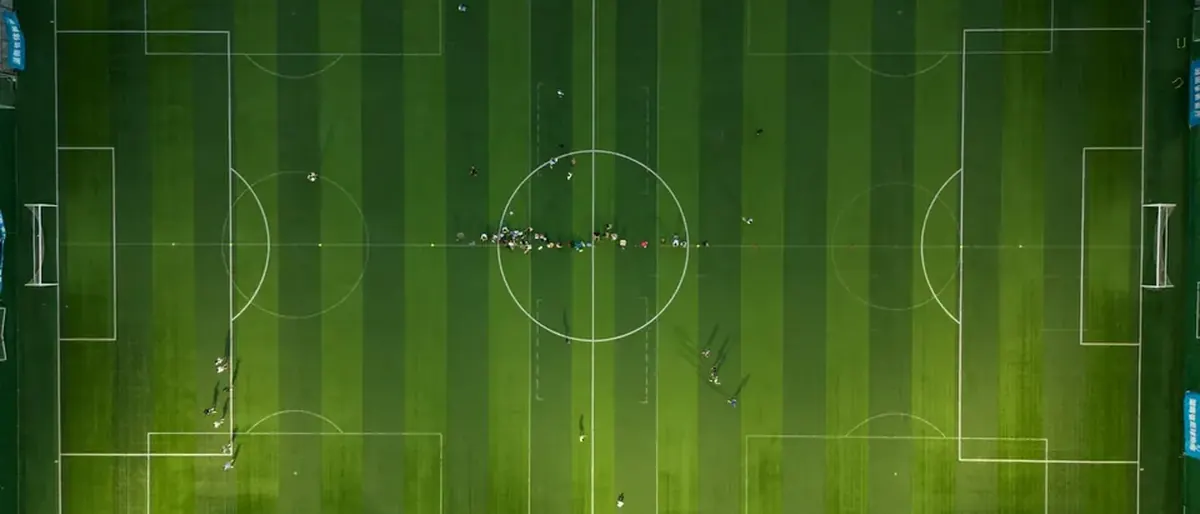
Gruev, meanwhile, is tasked with a more difficult job: lateral recovery. He must sprint to cover the wide channel if a full-back has pushed up. This is a physically demanding role, and it explains why Farke has rotated Gruev and Tanaka in certain matches. Tanaka, while more dynamic on the ball, is less disciplined in these recovery runs. Gruev’s work rate off the ball is what makes him invaluable in matches against teams with fast wingers.
The rotation here is subtle but critical. Farke often instructs Tanaka to stay higher and press the opposition’s deep-lying playmaker—a tactic designed to force the opponent to go long. If Tanaka wins the press, Leeds can launch a quick counter. If he loses it, Ampadu and Gruev must form a two-man shield. This high-risk, high-reward approach is a hallmark of Farke’s philosophy, but it requires immense trust in the midfield’s reading of the game.
The Final Third: Where the Rotation Creates Space
In the attacking third, the midfield rotation becomes less about structure and more about creating unpredictability. Farke’s system is not built on overlapping full-backs alone; it relies on midfield runners to destabilize the opposition’s defensive block.
Gruev, despite being the deepest passer, is often the one who makes late runs into the box. This is a counter-intuitive role for a player who averages a high number of passes per game. However, it is a deliberate tactic. When Gruev vacates his deep position, Tanaka drops into the space he leaves behind, creating a temporary double pivot with Ampadu. This rotation confuses the opposition’s midfield markers, who must decide whether to follow Gruev or stay with Tanaka.
The statistical output of this rotation is difficult to measure, but the tactical effect is clear: Leeds create more half-chances from the edge of the box and second-phase scenarios. For a striker like Dominic Calvert-Lewin, who thrives on crosses and cutbacks, these midfield rotations are essential. They pull defenders out of position, creating the half-yard of space needed for a shot.
The Verdict: A System Built on Trust
The midfield rotation under Farke is not a gimmick; it is a carefully designed system that maximizes the strengths of three very different players. Ampadu provides the defensive structure, Gruev offers the passing range and work rate, and Tanaka brings the progressive energy. Each player’s role is dependent on the others, and the rotation is only effective when all three are in sync.
For Leeds United, the challenge in the hypothetical 2025/26 season is maintaining this balance over 38 games. Injuries or suspensions to any of these three could force Farke to adapt. The manager’s ability to rotate without losing tactical coherence will likely determine whether the Whites can secure their Premier League status.
For a deeper dive into how these tactical choices impact the team’s overall performance, explore our analysis of Leeds United’s xG metrics and Farke’s approach to resilience training. The midfield is the brain of this team, and understanding its rotation is key to appreciating the complexity of Farke’s project at Elland Road.