


The numbers from the current Premier League season tell a troubling story for Leeds United. Through 31 matches, the club has conceded a significant number of goals from set pieces—corners, free kicks, and throw-ins—accounting for a notable share of the goals shipped overall. For a side fighting to stay afloat, every dead-ball concession feels like a puncture in the survival raft. Daniel Farke, a manager who orchestrated two Championship titles and two promotions with Norwich City and Leeds, now faces his most stubborn tactical puzzle: how to make his team robust when the ball stops moving.
The Structural Problem: Zonal vs. Man-Marking Confusion
When you watch Leeds defend a corner, the first thing that strikes you is the hybrid nature of their organization. Farke employs a mixed system—three players in zonal positions covering the near post, the six-yard box, and the penalty spot, while the remaining outfield players pick up specific opponents. In theory, this combines the spatial awareness of zonal marking with the accountability of man-to-man coverage. In practice, it creates a dangerous grey area.
The recurring issue emerges when the ball is delivered to the zone between the zonal defenders and the man-markers. In one recent match, a floated corner to the edge of the six-yard box saw both a zonal defender and a man-marker hesitate. The opponent attacker nodded home unchallenged. This hesitation stems from unclear communication: who attacks the ball when it lands in the overlapping zone?
Step-by-Step Diagnosis:
- Identify the trigger zones. During training at Thorp Arch, Farke's staff should map the three most dangerous delivery areas based on opponent analysis: the near-post area (0-3 yards from the goal line), the six-yard box centre, and the penalty spot arc.
- Assign clear ownership. Each zonal defender must have a non-negotiable responsibility for a defined area. If a ball lands within their zone, they attack it regardless of opponent movement. The man-markers must understand that their job is to impede runners, not to contest balls in the zone.
- Use a verbal cue system. A designated leader—typically the goalkeeper or a central defender—should shout a trigger word when the ball enters a contested zone. "Mine" for the goalkeeper, "Zone" for the zonal defender, or "Man" for the marker. This eliminates the hesitation that costs goals.
The Goalkeeper's Role: Command or Chaos?
Illan Meslier's shot-stopping has been a talking point all season, but his command of the penalty area during set pieces is a separate concern. In the current campaign, Leeds have conceded several goals from deliveries close to goal—balls that a commanding goalkeeper might claim or punch clear. Meslier's tendency to stay on his line rather than attacking crosses can force his defenders to defend in a compressed space, increasing the likelihood of deflections and scrambles.
The solution is not simply telling Meslier to be more aggressive. It requires a systematic change in how the goalkeeper reads deliveries. Farke's coaching staff should implement a three-tier decision framework:
- Tier 1 (within 3 yards of goal): The goalkeeper claims every ball. Defenders clear a path and screen opponents.
- Tier 2 (3-6 yards from goal): The goalkeeper attacks if he can reach the ball with two steps. If not, he holds position and trusts the zonal defender.
- Tier 3 (beyond 6 yards): The goalkeeper stays on his line, reads the trajectory, and prepares for a shot or headed effort.
The Role of the Front Three in Defensive Set Pieces
One of the most overlooked aspects of set-piece defence is the contribution of the attacking players. Under Farke, Leeds typically leave two or three forwards high when defending corners, hoping to spring counter-attacks. Dominic Calvert-Lewin, Lukas Nmecha, and Brenden Aaronson are often positioned near the halfway line, ready to receive clearances and drive forward.
While this tactic has yielded occasional opportunities, it creates a structural weakness. With fewer bodies in the box, Leeds are more vulnerable to second balls and deflections. Opponents have learned to crowd the penalty area, knowing that Leeds cannot match their numbers.
When to Adjust:
- Against teams with strong aerial presence (e.g., Everton, Burnley), Farke should consider dropping one of the front three into the box to add an extra defensive header.
- Against teams that overload the near post (e.g., Brighton, Aston Villa), the spare forward should be assigned to block the near-post runner rather than waiting for a counter.
- Against teams that play short corners, the wide forwards must be instructed to close down the taker immediately, preventing the cross from being delivered.
Training Drills to Fix Structural Weaknesses
Farke's training sessions at Thorp Arch are known for their intensity and tactical specificity, but set-piece defence has not always received the same attention as attacking patterns. To address the defensive lapses, the following drills should become weekly staples:
1. The Overload Drill: Set up a 10v8 scenario where the attacking team has two extra players in the box. The defensive team must communicate, switch markers, and clear the ball under pressure. This simulates the numerical disadvantage Leeds often face during corners.
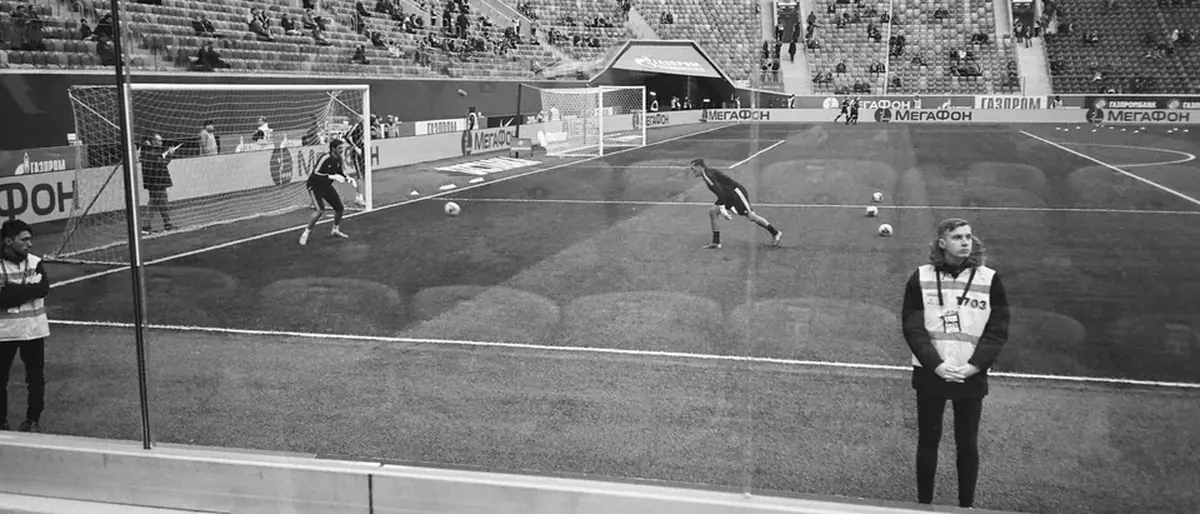
2. The Decision-Making Drill: Deliver 20 balls into the box from various angles—near post, far post, short, and deep. Each ball is preceded by a visual cue (e.g., a coloured cone indicating which zone the ball will target). Defenders must react based on the cue, reinforcing the zone-versus-man decision.
3. The Goalkeeper Command Drill: Meslier or Karl Darlow stands on the goal line while a coach delivers crosses from both flanks. A second coach shouts "claim," "punch," or "stay" as the ball is delivered. The goalkeeper must execute the command instantly, building reflexive decision-making.
These drills address the root cause of Leeds' set-piece vulnerability: not a lack of effort or athleticism, but a failure of coordination and decision-making under pressure.
When the Problem Requires Specialist Intervention
Not every set-piece issue can be solved by tactical tweaks and training ground drills. Some problems are personnel-specific or require external expertise. Leeds United should consider the following scenarios as triggers for specialist involvement:
Scenario 1: Persistent Concessions from the Same Delivery Type. If Leeds concede several goals from inswinging corners from the right side within a short window, it indicates a structural blind spot that the coaching staff cannot fix alone. A set-piece consultant—someone like Gianni Vio (formerly of Tottenham and Italy) or a dedicated analyst—can provide fresh eyes and data-driven solutions.
Scenario 2: Goalkeeper Performance Plateau. If Meslier continues to struggle with claiming crosses despite targeted drills, the issue may be psychological or technical. A goalkeeper coach with a background in aerial command, such as a former Premier League goalkeeper, should conduct an individual assessment.
Scenario 3: Opposition Exploitation of Specific Weaknesses. When opponents consistently target the same defender—for example, isolating a full-back at the far post or targeting a midfielder in the air—the coaching staff may need to adjust the marking assignments. If the problem persists across multiple matches, a specialist can design a tailored defensive scheme that hides the vulnerable player.
Conclusion: The Path to Resilience
Leeds United's set-piece defensive structure under Daniel Farke is not fundamentally broken. It is a system with sound principles—zonal coverage, man-marking, and counter-attacking potential—that suffers from execution errors and situational rigidity. The goals conceded from dead balls in the current Premier League season are not a condemnation of Farke's methods but a signal that refinement is overdue.
The solutions are within reach: clearer zone ownership, a goalkeeper decision framework, situational adjustments to the front three's positioning, and dedicated training drills that build coordination under pressure. By addressing the grey areas that opponents have exploited, Leeds can transform their set-piece defence from a vulnerability into a strength—a crucial step in a survival campaign where every goal conceded feels like a step closer to the Championship.
For a deeper look at how Farke's tactical philosophy shapes the entire team, explore our analysis of his pressing system from the front three and his rotation strategy for balancing domestic and European ambitions.