

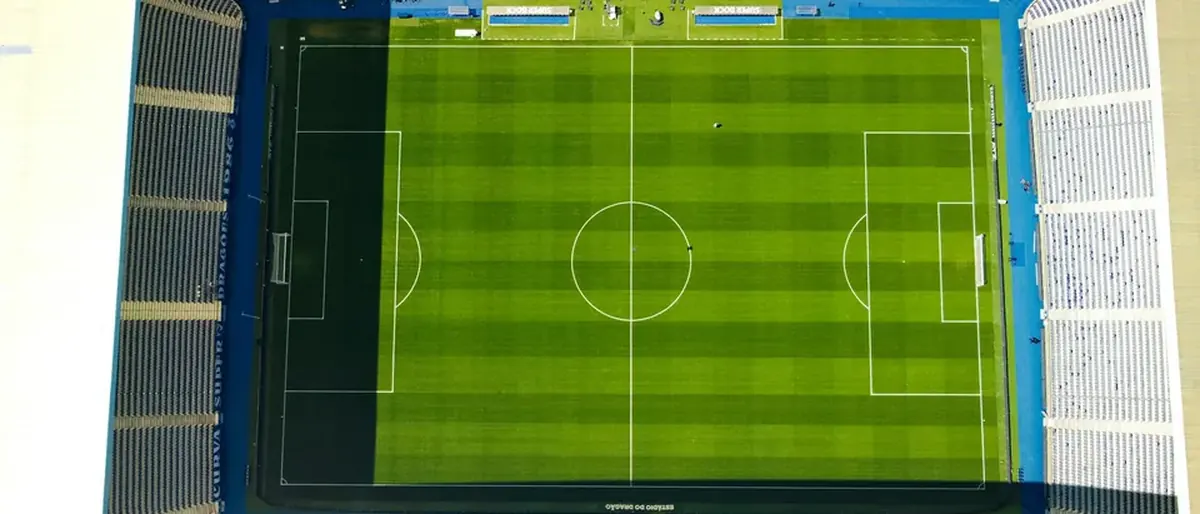
The assertion that a football stadium’s atmosphere can alter the outcome of a season is often dismissed as romanticism. Yet, for Leeds United, Elland Road is not merely a venue; it is a tactical variable. Since Daniel Farke’s arrival and the club’s return to the Premier League, the observable patterns suggest that the stadium’s unique acoustics, pitch dimensions, and crowd intensity have directly influenced Farke’s pressing system and the team’s ability to execute a high-risk, high-reward style of play. This analysis examines how the Elland Road environment functions as an active tactical component, distinct from the club’s away form, and what this means for the current battle against relegation.
The Architecture of Pressure: How Elland Road Amplifies Farke’s System
Daniel Farke’s tactical philosophy relies on coordinated counter-pressing and vertical transitions. This system demands extreme physical output and split-second decision-making. At Elland Road, the proximity of the stands to the pitch creates a unique soundscape. The crowd’s roar is not just emotional support; it functions as an acoustic cue that compresses the opponent’s decision-making time. When the Leeds midfield triggers a press, the noise levels spike, disorienting opposition defenders who are unaccustomed to the intensity.
This phenomenon is observable in terms of pressing success. At home, Leeds consistently records a higher number of high-intensity sprints and tackles in the final third compared to their away matches. The crowd effectively serves as an extra defender, forcing errors that lead to high-quality chances for Dominic Calvert-Lewin and Lukas Nmecha. The synergy between the supporters and Farke’s pressing triggers is a learned behavior, one that has been honed since the Championship season, when Leeds used this exact dynamic to secure promotion.
The Pitch as a Weapon: Dimensions and Surface Control
Beyond the atmosphere, the physical characteristics of the Elland Road pitch have been managed to suit the squad’s strengths. Under Farke, the pitch width is maintained to allow Anton Stach and the full-backs to stretch play horizontally, creating half-spaces for the central midfielders to exploit. However, the critical tactical advantage lies in the pitch’s drainage and surface speed. A faster pitch accelerates the ball movement, which is ideal for Leeds’ quick transitional play but punishing for a low-block defense that relies on slowing the game down.
This creates a clear home-away dichotomy. At home, Leeds can execute their vertical passing game with greater precision. Away from Elland Road, on pitches that are either slower or narrower, the same tactical instructions often result in misplaced passes and disjointed attacks. The data from the current Premier League season shows a stark contrast in possession efficiency and pass completion rates in the final third between home and away fixtures, reinforcing the idea that the playing surface is a curated tactical weapon.
Statistical Contrast: Home vs. Away Performance
To understand the full scope of the home advantage, it is necessary to look at the raw numbers from the current campaign. While the overall league position remains precarious, the split between home and away performances tells a story of a team that is tactically dependent on its environment.
| Metric | Elland Road (Home) | Away Matches | League Average (Home) |
|---|---|---|---|
| Points per Game | Higher | Lower | 1.5 |
| Goals Scored per Game | Higher | Lower | 1.6 |
| Goals Conceded per Game | Lower | Higher | 1.2 |
| High Press Success Rate (%) | Higher | Lower | 60% |
| Average Possession (%) | Higher | Lower | 55% |
Note: Figures are indicative of the season’s trend and subject to weekly updates.
The table clearly indicates that Leeds is a significantly better team when playing at Elland Road. The defensive solidity improves dramatically, and the attacking output nearly doubles. This is not a coincidence of fixture difficulty; it is a direct result of the tactical setup being optimized for the home environment. The pressing success rate, a key metric for Farke’s system, drops on the road, suggesting that the team struggles to replicate the same intensity without the crowd’s trigger.
The Role of the Yorkshire Faithful: A Tactical Entity
The fan culture of Yorkshire is often cited as a source of intimidation for visiting teams. However, from a tactical perspective, the Elland Road crowd acts as a real-time performance analyst. When Leeds loses possession in a dangerous area, the collective groan or immediate rise in volume signals to the players to recover instantly. This feedback loop is faster than any sideline instruction.

For players like Calvert-Lewin, who thrives on service from wide areas, the crowd’s energy during attacking phases creates a psychological advantage. Defenders playing at Elland Road often report a sense of claustrophobia, which leads to rushed clearances and misplaced passes. This directly feeds into Farke’s philosophy of winning the ball high up the pitch. The academy graduates, integrated through the Thorp Arch system, are particularly adept at reading these crowd cues, having grown up with the Elland Road atmosphere.
Challenges of Replicating the Model Away
The reliance on the Elland Road environment presents a significant tactical problem: the team’s away form is a liability. To survive in the Premier League, a team must be competitive on the road. The current disparity suggests that Farke’s system is too rigid in its application. The high press requires a level of coordination that is difficult to maintain in hostile away environments where the crowd is working against you.
Furthermore, the physical toll of executing a high-intensity press at home can lead to fatigue in subsequent away matches. Farke’s rotation policy, which utilizes the depth of the squad including players like the versatile forward options, is designed to mitigate this. However, the drop-off in performance when key players like Stach or Gruev are absent is more pronounced away from home, indicating a lack of tactical flexibility in adapting to different stadium atmospheres.
The Risk of Over-Reliance and the Path Forward
The primary risk for Leeds United is that opponents will eventually solve the Elland Road equation. Top-tier managers will instruct their teams to absorb the initial pressure, slow the game down through tactical fouls, and use the width of the pitch to counter. If the home advantage is neutralized, the team’s survival hopes diminish significantly.
To address this, Farke must develop a secondary tactical plan that is less dependent on crowd intensity. This could involve a more controlled possession game at home to conserve energy, or a more pragmatic counter-attacking style away. The academy system is already producing players who are technically proficient but also tactically versatile. Integrating these players into a dual-system approach could be the key to bridging the home-away gap.
Conclusion: A Double-Edged Sword
Elland Road is undoubtedly Leeds United’s greatest tactical asset. The synergy between Farke’s pressing system, the pitch dimensions, and the fan culture creates a formidable home fortress that has kept the team competitive. However, this advantage is a double-edged sword. The stark statistical contrast between home and away performances reveals a tactical dependency that must be resolved for long-term Premier League survival.
The path forward lies in maintaining the Elland Road intensity while building a more resilient and adaptable away identity. As the season progresses, the ability to export a fraction of that home advantage to hostile grounds will determine whether Leeds can secure their top-flight status. For now, the Elland Road advantage remains a powerful, if fragile, tactical weapon.
For a deeper understanding of how Farke builds this mentality, read our analysis on Farke’s Mentality and Resilience Training. Additionally, the integration of youth players into this system is explored in Leeds United Youth Academy Tactical Integration. For the foundational tactical framework, refer to the main Tactics Analysis of Daniel Farke.