

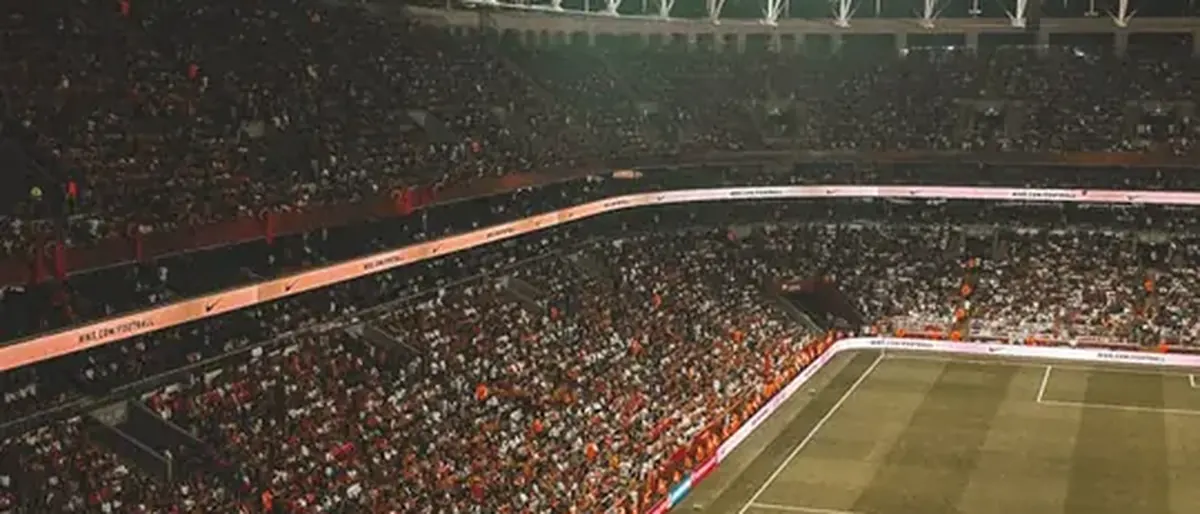
When Leeds United supporters gather at Elland Road, the name Don Revie still echoes through the stands with a reverence that transcends generations. The era he built between 1961 and 1974 remains the most transformative period in the club's history, a time when a second-tier side was moulded into English football's most formidable, feared, and frequently controversial force. To understand the identity of modern Leeds United—the battling spirit, the tactical intelligence, the relentless work ethic, and the deep connection with Yorkshire's industrial heartland—one must first understand the Revie revolution.
The Architect of a Dynasty
Don Revie arrived at Leeds United in March 1961 as a player-manager, inheriting a club languishing in the Second Division with decaying facilities and a dwindling fanbase. The Elland Road of the early 1960s was a far cry from the iconic stadium we recognise today; attendances had dropped below 10,000, and the club was on the brink of financial collapse. Revie, a former England international who had won the FA Cup with Manchester City in 1956, brought with him a vision that was both pragmatic and revolutionary.
What distinguished Revie from his contemporaries was his meticulous approach to preparation. He introduced dossier-based scouting, where every opponent was analysed in forensic detail—their formations, set-piece routines, individual weaknesses, and psychological triggers. He studied the revolutionary methods of Hungarian and Brazilian teams, absorbing their fluid movement while adapting it to the physical demands of English football. This was not merely coaching; it was the birth of modern football analytics at a provincial club that most of the football establishment had written off.
Revie also understood the power of psychology. He fostered a siege mentality, convincing his players that the entire football world was against Leeds United. This us-vs-them narrative, rooted in the perceived snobbery of southern clubs toward Yorkshire's industrial grit, became the emotional fuel that powered a generation of players. The "Revie's Donkeys" jibe from opposing fans only strengthened the bond between manager and squad.
Building the Backbone: The 1964 Promotion
The first major milestone arrived in 1963-64, when Leeds United secured promotion back to the First Division after a four-year absence. The squad Revie assembled was a masterclass in talent identification. He recruited players who were either overlooked by bigger clubs or deemed too old, too slow, or too difficult. Billy Bremner, a fiery Scottish midfielder signed from a Scottish junior side for a pittance, became the heartbeat of the team. Jack Charlton, a tall, ungainly centre-half who had been at Leeds since his teens, was transformed from a journeyman into an England international. Norman Hunter, known as "Bites Yer Legs," brought a ferocity that became synonymous with the Leeds defence.
The promotion season was built on defensive solidity and counter-attacking precision. Revie's Leeds played with a discipline that was rare for the era, tracking back relentlessly and denying opponents space. They conceded few goals in 42 league matches, a defensive record that would become the hallmark of the Revie years. But this was not purely negative football; the attacking transitions were swift and incisive, with winger Eddie Gray providing the creative spark and striker Alan Peacock the finishing touch.
The First Division Conquest: 1968-69
After promotion, Leeds United established themselves as perennial challengers. They finished second in 1964-65 and 1965-66, losing the title on goal average in the first instance and by a single point in the second. The near-misses only deepened the squad's resolve. The 1967-68 season brought the League Cup, the club's first major trophy, followed by the Inter-Cities Fairs Cup (the forerunner to the UEFA Cup) in the same campaign.
But the crowning achievement arrived in 1968-69. Leeds United won the First Division title with a record points total, finishing clear of second-placed Liverpool. They lost only two league matches all season, scoring 66 goals and conceding just 26. The team was a perfect machine: Bremner orchestrating from midfield, Johnny Giles providing technical elegance, Allan Clarke delivering clinical finishing, and the defensive axis of Charlton and Hunter providing an impenetrable barrier.
This was not a team that relied on individual brilliance alone. Revie had created a system where every player understood his role with absolute clarity. Full-backs Paul Reaney and Terry Cooper provided width, the midfield trio of Bremner, Giles, and Eddie Gray rotated positions fluidly, and the strikers worked tirelessly to press opponents. The pressing game that modern managers employ at Leeds today has its philosophical roots in the Revie system—a coordinated, intelligent chase to win the ball high up the pitch.
The 1973-74 Title and European Heartbreak
Leeds United's second league title under Revie came in 1973-74, a season that showcased the team's evolution. The football had become more expansive, with the arrivals of players like Peter Lorimer, whose thunderous shot was noted for its power, and the elegant midfielder Frank Gray. Leeds won the title from Liverpool, scoring 71 goals in the process.

Yet the Revie era is also defined by its near-misses in European competition. The 1970 European Cup semi-final against Celtic remains one of the most controversial matches in the club's history. Leeds were denied a clear penalty in the first leg at Elland Road, then lost at Hampden Park in a match marred by contentious refereeing decisions. The 1973 European Cup Winners' Cup final against AC Milan was even more notorious, with the referee awarding Milan a dubious penalty and disallowing a legitimate Leeds goal. To this day, many Leeds supporters believe the club was systematically cheated by European football's establishment, which viewed Revie's direct style with suspicion.
The 1975 European Cup final against Bayern Munich, played after Revie had left to manage England, was the final act of this golden era. Leeds dominated the match but lost to a Bayern side that included Franz Beckenbauer and Gerd Müller. The defeat was compounded by the behaviour of Leeds supporters, who rioted after a clearly offside goal was allowed to stand. The club was banned from European competition, a punishment that effectively ended the dynasty.
The Revie Legacy: Tactical and Cultural Impact
Don Revie's influence on Leeds United extends far beyond the trophy cabinet. He built a club identity that persists to this day: hard-working, intelligent, slightly paranoid, and fiercely proud of its Yorkshire roots. The famous "Leeds, Leeds, Leeds" anthem, the white shirts, the atmosphere at Elland Road—all of these elements were forged during the Revie years.
Tactically, Revie was ahead of his time. His use of video analysis, detailed scouting reports, and periodised training sessions was revolutionary for English football in the 1960s. He understood that football was not just about physical effort but about information advantage. The modern Leeds side, with its emphasis on pressing patterns, positional rotations, and data-driven preparation, is a direct descendant of Revie's methodology.
| Aspect | Revie Era (1961-1974) | Modern Context |
|---|---|---|
| League Titles | 2 (1968-69, 1973-74) | 1 (1991-92 under Wilkinson) |
| Major Trophies | 4 (2 titles, 1 FA Cup, 1 League Cup) | 0 since 1992 |
| European Finals | 2 (1970 semi, 1973 final, 1975 final) | 0 since 2001 |
| Playing Style | Pressing, counter-attacking, defensive solidity | Pressing, possession-based |
| Academy Output | Bremner, Charlton, Hunter, Lorimer | Recent graduates |
The Connection to the Present: From Revie to Farke
When Daniel Farke leads Leeds United, he carries the weight of this history. The current squad operates within a tactical framework that Revie would recognise—high pressing, intelligent movement, and a collective defensive responsibility. The Elland Road crowd, still singing the same songs from the Revie era, demands nothing less than total commitment.
The parallels between Revie's early years at Leeds and Farke's tenure are striking. Both inherited clubs in transition. Both rebuilt through a combination of astute recruitment and tactical innovation. Both faced scepticism from the football establishment. And both understood that success at Leeds United requires more than just talent—it requires an emotional connection to the city and its people.
The Enduring Question: What If?
The Revie era ended abruptly in July 1974 when Revie accepted the England manager's job. The timing was devastating; Leeds were at their peak, having just won the league title and reached the European Cup final. Revie's departure triggered a decline that took decades to reverse. The club would not win another league title until Howard Wilkinson's triumph in 1991-92, and the European glory that Revie pursued so obsessively remains elusive.
Yet the question that haunts every Leeds supporter is simple: what if Revie had stayed? What if the European Cup final of 1975 had been won? What if the club had not been banned from Europe? The counterfactual history is tantalising. Leeds might have become a European superpower, competing with the likes of Bayern Munich and Ajax. The financial rewards of sustained European success might have prevented the decline of the 1980s. The club's identity might have been defined by triumph rather than tragedy.
But perhaps the uncertainty is precisely what makes the Revie era so compelling. It is a story of what was achieved against all odds, of a small city club that dared to challenge the establishment, of a manager who saw potential where others saw only limitations. It is a story that continues to inspire every player who pulls on the white shirt and every supporter who fills Elland Road. The golden age may be over, but its lessons endure.