

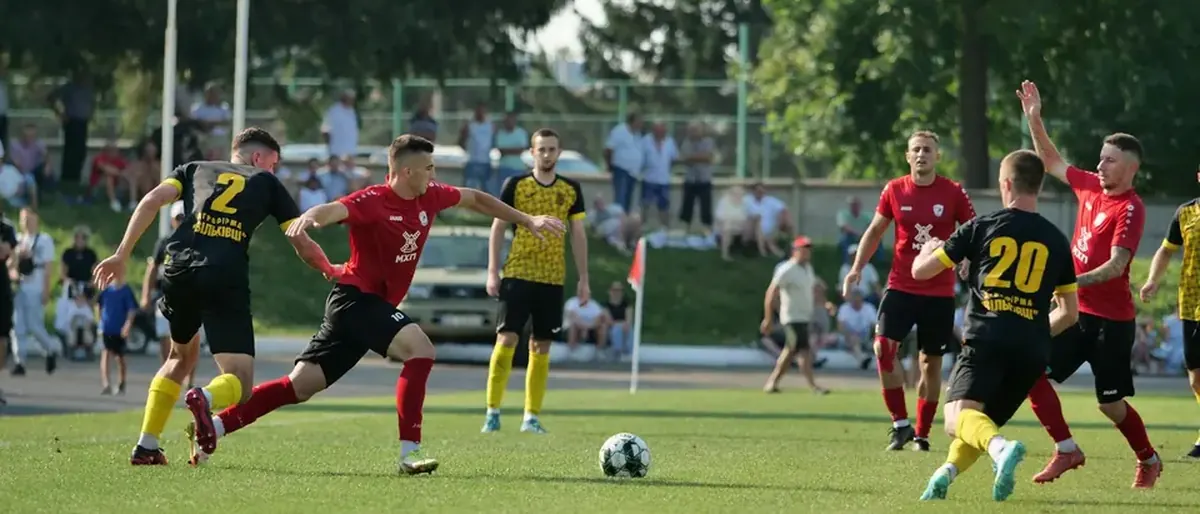
When Daniel Farke arrived at Elland Road in July 2023, he inherited a club still reeling from the emotional and structural aftershock of Premier League relegation. The squad was bloated, the morale fractured, and the tactical identity—once so clearly defined under Marcelo Bielsa—had dissolved into a series of reactive, short-term fixes. Farke, a manager who had already won two Championship titles with Norwich City, brought with him a specific, non-negotiable philosophy: a high-pressing, possession-based system rooted in German football's modern tactical evolution. Understanding how Farke's pressing philosophy operates at Leeds United is essential for anyone seeking to grasp the club's trajectory, its promotion ambitions, and its potential fight for survival in the Premier League.
The Structural Foundations of Farke's Pressing System
Farke's pressing philosophy is not improvisational chaos; it is a meticulously structured system built on three core principles: compactness, trigger-oriented pressing, and vertical compactness between the lines. Unlike Bielsa's man-for-man, all-out aggression, Farke employs a zonal-oriented pressing scheme that prioritises collective shape over individual heroics. The team defends in a 4-2-3-1 or 4-3-3 block, depending on the opponent and match context, but the pressing triggers remain consistent.
The first principle is the reduction of space between the defensive and midfield lines. Farke demands that his back four push up to within 35–40 metres of the opponent's goal when the opposition has the ball in their own third. This compresses the pitch vertically, forcing the opponent into rushed, often inaccurate passes. The midfield pivot—typically occupied by a combination of Ilya Gruev and Anton Stach—is tasked with screening the central channels while simultaneously stepping forward to engage the opposition's deeper midfielders when the ball is played into their feet.
The second principle is the use of "pressing traps." Farke deliberately allows the opposition centre-backs to have the ball in wide areas, funnelling play toward the touchline. Once the ball reaches the full-back or winger, Leeds trigger a coordinated overload: the near-side winger presses the ball carrier, the striker cuts off the pass back to the centre-back, and the near-side central midfielder closes the passing lane to the opponent's central midfielder. This creates a triangular trap designed to force a turnover in dangerous wide areas, from which Leeds can launch quick transitions.
The Role of the Striker in the Press
The striker's role in Farke's pressing system is perhaps the most physically demanding position in the squad. Unlike a traditional target man who simply holds up the ball, the striker is required to be the first line of defence. He must constantly scan the opposition's defensive shape, identify which centre-back is the weaker ball-player, and angle his runs to cut off passing lanes while simultaneously pressing the ball.
Farke's striker is not expected to win every duel; rather, he is expected to force the opposition into predictable patterns. The striker's movement—curving his runs to block the pass to the defensive midfielder, then explosively closing down the centre-back—creates the trigger for the entire team to shift. When the press is executed correctly, the opposition's only viable option becomes a long, hopeful ball forward, which Leeds' centre-backs, comfortable in their defensive positioning, can often intercept.
This system places a premium on the striker's work rate and tactical intelligence. Lukas Nmecha, who has featured as a secondary option, offers a slightly different profile—more comfortable dropping into deeper areas to link play—but the core demands remain the same. The striker must be the team's first defender, or the entire pressing structure collapses.
Midfield Dynamics: The Engine Room of the Press
The midfield trio is the critical link between the pressing forwards and the defensive line. Under Farke, the central midfielders are not merely disruptors; they are positional organisers. Brenden Aaronson, operating as the advanced central midfielder or number ten, has a dual responsibility: he must press the opposition's deepest midfielder when the ball is in the opponent's half, but he must also be the first player to drop into the defensive block when the press is bypassed.
Aaronson's relentless energy is a key asset, but Farke has also refined his positional discipline. In a successful Championship campaign, Aaronson's pressing metrics were among the highest in the division, and his tactical maturity—knowing when to commit and when to hold—has improved markedly. He now understands that pressing is not about covering the most ground; it is about covering the most dangerous ground.
Anton Stach and Ilya Gruev, the two deeper midfielders, operate as the team's tactical fulcrum. Stach, with his Bundesliga experience, is the more aggressive of the two, stepping forward to engage opposition midfielders when the press is triggered. Gruev, meanwhile, is the screen—the player who reads danger, drops into the back line when full-backs push up, and provides the defensive cover that allows the pressing structure to remain intact. Their partnership is built on complementary skills: Stach presses high and disrupts; Gruev covers and organises.
Pressing in the Premier League: Adaptation and Challenge
The transition from the Championship to the Premier League has exposed both the strengths and limitations of Farke's pressing philosophy. In a Championship title-winning season, Leeds dominated possession in the majority of matches, and the press was consistently effective because opponents were forced to play out from the back against a superior technical side. The Premier League, however, presents a different reality.
Leeds' record in the Premier League reflects the difficulty of maintaining a high press against teams with superior individual quality. Opponents like Manchester City, Arsenal, and Liverpool possess the technical precision to play through the first line of pressure, forcing Leeds to retreat into a deeper block. When the press is broken, the space left behind the high defensive line becomes a significant vulnerability.
Farke has responded by introducing a more flexible pressing structure in certain matches. Against top-six sides, Leeds have occasionally adopted a mid-block, pressing only when the ball enters the middle third. This pragmatic adjustment has yielded mixed results: it reduces the risk of being caught in transition, but it also cedes territorial control, which can invite sustained pressure on the Leeds goal.
The table below outlines the key differences between Leeds' pressing approach in the Championship and the Premier League:
| Aspect | Championship | Premier League |
|---|---|---|
| Pressing intensity | High, sustained | Variable, match-dependent |
| Defensive line height | 38–42 metres from goal | 32–38 metres from goal |
| Opponent quality | Lower technical level | Higher technical precision |
| Press success rate | High (forced turnovers in final third) | Moderate (more broken plays) |
| Transition vulnerability | Low | Moderate to high |
| Midfield pressing trigger | Aggressive, early engagement | Selective, delayed engagement |
The Influence of Elland Road and Yorkshire Fan Culture
No analysis of Farke's pressing philosophy at Leeds United is complete without acknowledging the role of Elland Road and the club's unique supporter culture. The Yorkshire fan base, known for its demanding, passionate, and historically informed expectations, has a direct impact on how the pressing system is received and executed.
Elland Road is a cauldron of noise, and the crowd's energy often serves as a "12th man" for the press. When Leeds push high and force a turnover in the opponent's half, the roar from the stands amplifies the intensity, creating a feedback loop that drives the players forward. Farke has frequently referenced the importance of the home support in sustaining the physical demands of his system, particularly in the final 20 minutes of matches when fatigue sets in.
However, this relationship is not without tension. The Yorkshire fan culture prizes effort, commitment, and visible passion. When the press falters—when a player fails to close down, when a trigger is missed, when the team drops too deep—the crowd's frustration is immediate and audible. Farke must balance the tactical purity of his system with the emotional demands of a fan base that expects nothing less than total commitment.
Comparison with the 2020/21 Survival Season
Leeds' Premier League campaign inevitably invites comparison with the 2020/21 season, when the club, under Marcelo Bielsa, finished ninth in their first season back in the top flight. The contrast in pressing philosophies is instructive.
Bielsa's press was characterised by relentless man-for-man marking across the entire pitch, regardless of the scoreline or opponent. It was a system of maximum risk and maximum reward, producing thrilling victories against top sides but also catastrophic defeats when the press was breached. Farke's system is more conservative in its aggression, more reliant on collective positioning than individual duels.
In the 2020/21 season, Leeds averaged a higher number of pressures per game but also conceded more high-quality chances on the counter-attack. Farke's Leeds press less frequently but with greater structural discipline. The question is whether this more measured approach can generate enough turnovers to compensate for the reduced attacking threat.
The table below summarises the key tactical differences:
| Aspect | 2020/21 (Bielsa) | Farke's Leeds |
|---|---|---|
| Pressing style | Man-for-man, all-pitch | Zonal, trigger-based |
| Defensive line | Ultra-high (35–40m) | High but variable (32–38m) |
| Midfield approach | Aggressive, individual duels | Positional, collective screening |
| Transition risk | Very high | Moderate |
| Attacking output | High goals, high chances | Moderate goals, controlled build-up |
| Fan reception | Emotional, cult-like devotion | Respectful, but pragmatic scrutiny |
Risks and Vulnerabilities of the System
No pressing philosophy is without its weaknesses, and Farke's system has several identifiable vulnerabilities that opponents have exploited.
The first is the vulnerability to quick, vertical passes between the lines. When the pressing trap is triggered but the opponent's centre-back manages to play a sharp pass into the feet of an advanced midfielder, Leeds' midfield line is often caught too high, leaving the back four exposed. This has been a recurring issue against teams with creative number tens, such as Aston Villa and Brighton.
The second vulnerability is fatigue. Farke's pressing demands are physically extreme, and the Premier League's relentless schedule—with midweek matches, cup competitions, and international breaks—places enormous strain on the squad. Leeds have struggled to maintain pressing intensity in the final 15 minutes of matches, particularly when the same starting eleven is fielded repeatedly. This is where the club's rotation patterns, analysed in detail in our dedicated piece on rotation patterns, become critical.
The third vulnerability is the reliance on individual errors. When a single player fails to execute his pressing assignment—whether through miscommunication, fatigue, or lack of concentration—the entire structure can collapse. This is particularly true for the full-backs, who must simultaneously press high and recover defensively. When the full-back is beaten, the centre-back is forced to step out of the defensive line, creating gaps that elite attackers exploit ruthlessly.
Conclusion: A Philosophy Under Pressure
Daniel Farke's pressing philosophy at Leeds United is not a relic of his Norwich days; it is a living, evolving system that must adapt to the realities of Premier League football. The Championship title was won through the disciplined execution of this system against opponents who could not match Leeds' technical and physical intensity. The Premier League campaign, however, has revealed the gap between a philosophy that works in one context and a philosophy that can survive in another.
The pressing system remains the foundation of Farke's identity as a manager. It is the reason Leeds can compete with technically superior sides, the reason Elland Road remains a fortress, and the reason the club's fan base, despite moments of frustration, continues to believe in the project. But the system is not infallible. It requires constant refinement, intelligent rotation, and, most importantly, players who can execute its demands with consistency.
As Leeds navigate the Premier League season, the pressing philosophy will be tested severely. The team's survival—and Farke's long-term future at the club—will depend on whether the system can bend without breaking. For a deeper analysis of how Farke's approach compares with the club's previous Premier League survival campaign, see our detailed comparison in comparison with 2020/21 survival. And for a comprehensive breakdown of his overall tactical framework, visit our hub on tactics analysis Farke.