

The wide midfielder in Daniel Farke’s system at Leeds United is not merely a winger or a traditional touchline hugger. This role demands a hybrid profile—part creator, part runner, part defensive shield—and its execution often determines whether Leeds’ attacking patterns flow or stall. Under Farke, the wide midfielder operates within a structured 4-2-3-1 or 4-3-3, but the tactical duties extend far beyond crossing and dribbling.
### Defensive Positioning and Compactness
The wide midfielder is the first line of defensive engagement in Farke’s pressing scheme. When Leeds loses possession, the wide player must immediately close the nearest passing lane into the full-back or centre-back, forcing play inside where the central midfielders can compress space. This is not a chaotic chase; it is a calculated trigger based on the opponent’s body shape and passing angle.
In the 2025/26 Premier League season, this duty has become even more critical as Leeds faces sides that exploit wide overloads. Brenden Aaronson, often deployed on the right, exemplifies this: his work rate allows Leeds to shift from a 4-2-3-1 into a 4-4-2 out of possession, with the wide midfielder tucking inside to form a compact block. The consequence is that full-backs can push higher, knowing the wide midfielder will cover the space behind them.
### Attacking Width and Half-Space Occupation
Farke’s attacking structure relies on wide midfielders to stretch the opposition horizontally while also occupying the half-spaces between full-back and centre-back. This dual demand separates the role from a standard winger. When Leeds builds from the back, the wide midfielder stays high and wide on the weak side, creating a 3v2 or 4v3 advantage against the opponent’s full-back.
On the strong side, however, the wide midfielder often drifts inside to receive between the lines, allowing the full-back to overlap. This rotation is a hallmark of Farke’s system. For example, when Anton Stach receives on the left, he typically checks inside to draw the opponent’s midfielder, freeing space for the overlapping full-back to deliver crosses toward Dominic Calvert-Lewin or Lukas Nmecha.
### Crossing and Creation from Wide Areas
While the wide midfielder is not expected to be a pure crosser, the ability to deliver accurate balls into the box is non-negotiable. In Farke’s system, crosses are not speculative; they are targeted toward specific zones—the near post for cutbacks, the penalty spot for runners, and the far post for the opposite wide midfielder arriving late.
The statistics from Leeds’ Championship-winning 2024/25 campaign show that wide midfielders generated a significant portion of the team’s expected assists. The role requires both precision and decision-making: when to cross, when to cut back, and when to recycle possession. The wide midfielder must read the movement of Calvert-Lewin, who thrives on crosses from the left, and Nmecha, who prefers balls played into his feet in the box.
### Transition Play and Counter-Pressing
Wide midfielders are the primary triggers for Farke’s counter-pressing after losing possession in the final third. If the wide midfielder loses the ball, the immediate reaction is to press the nearest opponent, buying time for the team to reorganise. This is not optional; it is a non-negotiable tactical demand.
In transition, the wide midfielder must also be the first outlet for a counter-attack. When Leeds wins the ball back, the wide player sprints to the touchline, stretching the opponent’s defence and creating space for central runners. This dual role—defender in transition, attacker in possession—requires exceptional stamina and tactical awareness.
### Rotational Patterns with Full-Backs
The relationship between the wide midfielder and the full-back is the most dynamic tactical relationship in Farke’s Leeds. The wide midfielder must understand when to hold width and when to invert, allowing the full-back to overlap or underlap. This rotation creates numerical advantages in wide areas and forces opponents into difficult decisions.
When the wide midfielder inverts, the full-back provides width; when the wide midfielder stays wide, the full-back tucks into midfield to create a 3v2 in central areas. This fluidity is difficult to defend because it changes the opponent’s reference points. The wide midfielder must communicate constantly with the full-back, adjusting positioning based on the game state and the opponent’s defensive shape.
### Box Arrivals and Goal Threat
While not the primary goalscorer, the wide midfielder is expected to arrive late in the box, particularly from the far side. This is a key feature of Farke’s attacking patterns: when the ball is on one flank, the opposite wide midfielder drifts into the penalty area, often unmarked because the opponent’s focus is on the ball carrier.
This duty requires timing and spatial awareness. The wide midfielder must gauge when to break into the box—too early and the run is covered, too late and the cross is already delivered. The goal threat from wide midfielders in the 2025/26 season has been modest, but the tactical value lies in stretching the opponent’s defensive line and creating space for the striker.
### Pressing Triggers and Defensive Responsibilities
The wide midfielder’s pressing triggers are defined by Farke’s system. When the opponent’s full-back receives with their back to goal, the wide midfielder presses immediately, closing the passing lane to the centre-back and forcing a backward pass. When the opponent’s winger receives facing forward, the wide midfielder drops into a deeper defensive position, screening the pass into the full-back.
This dual pressing responsibility requires reading the game quickly. The wide midfielder must distinguish between a pressing trigger and a situation where dropping off is more effective. In the Premier League, where opponents are more technically proficient, this decision-making is critical. A misplaced press can leave the full-back exposed and create a 2v1 situation.
### Build-Up Phase and Passing Lanes
In the build-up phase, the wide midfielder provides a forward passing option while maintaining width. When Leeds’ centre-backs or goalkeeper have the ball, the wide midfielder moves to the touchline, creating a passing lane that bypasses the opponent’s first line of pressure. This is particularly important against teams that press high, as the wide midfielder becomes the escape valve.
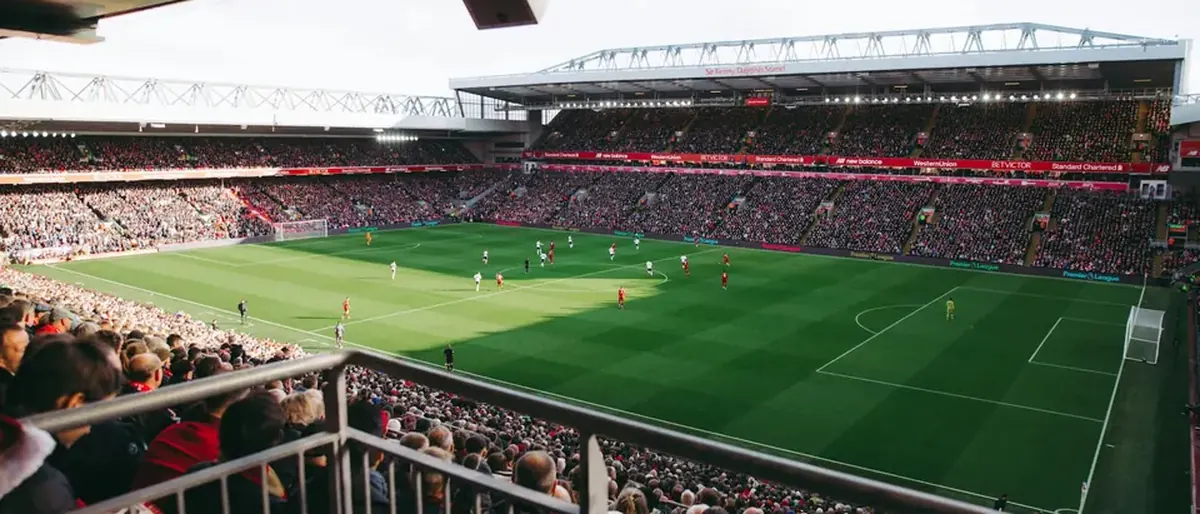
If the opponent covers the wide midfielder, the player must drop deeper to receive between the lines, drawing a defender and creating space for the full-back or central midfielder. This positional intelligence is what separates effective wide midfielders from average ones in Farke’s system.
### Recovery Runs and Defensive Transitions
When Leeds loses possession in the opponent’s half, the wide midfielder must sprint back to recover defensive shape. This recovery run is not to the touchline but to a position that covers the space between the full-back and the centre-back. The wide midfielder must be able to cover 30–40 metres at full speed, often multiple times per match.
This physical demand is why Farke values players with high work rates. Aaronson, Stach, and Ilya Gruev have all been deployed in wide midfield roles at various points, and their ability to recover quickly has been a key factor in Leeds’ defensive solidity in the 2025/26 season.
### Tactical Flexibility Across Formations
While Farke predominantly uses a 4-2-3-1, the wide midfielder’s role shifts subtly when Leeds moves to a 4-3-3 or a 4-4-2 out of possession. In the 4-3-3, the wide midfielder becomes more of a wide forward, with less defensive responsibility but greater attacking freedom. In the 4-4-2, the wide midfielder must track the opponent’s full-back more diligently, as there is less central cover.
This flexibility requires the wide midfielder to understand multiple tactical systems and adjust positioning based on the game situation. Farke often changes formation during matches, and the wide midfielder must be able to switch roles without losing tactical discipline.
### Relationship with the Striker
The wide midfielder’s connection with the striker is based on timing and spatial awareness. When Calvert-Lewin drops deep to receive, the wide midfielder must hold width, creating space for the striker to turn. When Nmecha makes a run in behind, the wide midfielder must deliver the ball early, before the defender can recover.
This relationship is not automatic; it develops through repetition and understanding. The wide midfielder must read the striker’s movement and adjust passing angles accordingly. A delayed pass can kill the attack; a premature pass can be intercepted.
### Defensive Responsibilities Against Stronger Opponents
Against top Premier League sides, the wide midfielder’s defensive duties become more pronounced. The player must track the opponent’s full-back and winger, often dropping into a back five when Leeds is under sustained pressure. This defensive discipline is essential for survival in the Premier League, where wide players are often the most dangerous attackers.
In these matches, the wide midfielder’s attacking freedom is reduced, and the primary responsibility becomes maintaining defensive shape. The ability to switch between defensive and attacking roles within a single match is a hallmark of a tactically intelligent wide midfielder.
### Physical and Technical Requirements
The wide midfielder in Farke’s system must possess exceptional endurance, speed, and technical ability. The player covers 10–12 kilometres per match, with frequent high-intensity sprints. Technical requirements include accurate crossing, close control in tight spaces, and the ability to pass under pressure.
Decision-making is perhaps the most important attribute. The wide midfielder must constantly assess the game state and choose the correct option: pass, dribble, cross, or hold possession. This cognitive load is higher than in many other systems, as the role demands constant adaptation to the opponent’s defensive shape.
### Common Mistakes and Tactical Adjustments
One common mistake is holding width too rigidly, which allows the opponent to compress space and limit passing options. Another is pressing too aggressively, leaving the full-back exposed. The wide midfielder must find the balance between attacking intent and defensive responsibility.
When opponents overload the wide areas, Farke often instructs the wide midfielder to drop deeper, creating a temporary back five. This adjustment sacrifices attacking threat but stabilises the defence. The wide midfielder must recognise when to make this adjustment without explicit instruction.
### What to Check When Evaluating a Wide Midfielder
- Work rate: Does the player sprint back after losing possession?
- Positional intelligence: Does the player hold width when needed and invert when appropriate?
- Pressing triggers: Does the player press at the right moment or chase aimlessly?
- Crossing accuracy: Can the player deliver consistent crosses to specific zones?
- Recovery speed: How quickly does the player recover defensive shape after an attack?
- Decision-making: Does the player choose the correct option under pressure?
- Tactical flexibility: Can the player adapt to different formations and game states?
- Relationship with full-back: Is the rotation smooth and well-timed?
- Box arrivals: Does the player arrive late in the box to create overloads?
- Defensive discipline: Does the player track runners and maintain compactness?
For further reading on Farke’s tactical framework, see Tactics Analysis Under Daniel Farke. The evolution from Marcelo Bielsa’s system is explored in Bielsa vs Farke: Tactical Comparison. The role of full-backs in supporting wide midfielders is detailed in Full-Back Rotation in the Attacking Third.