

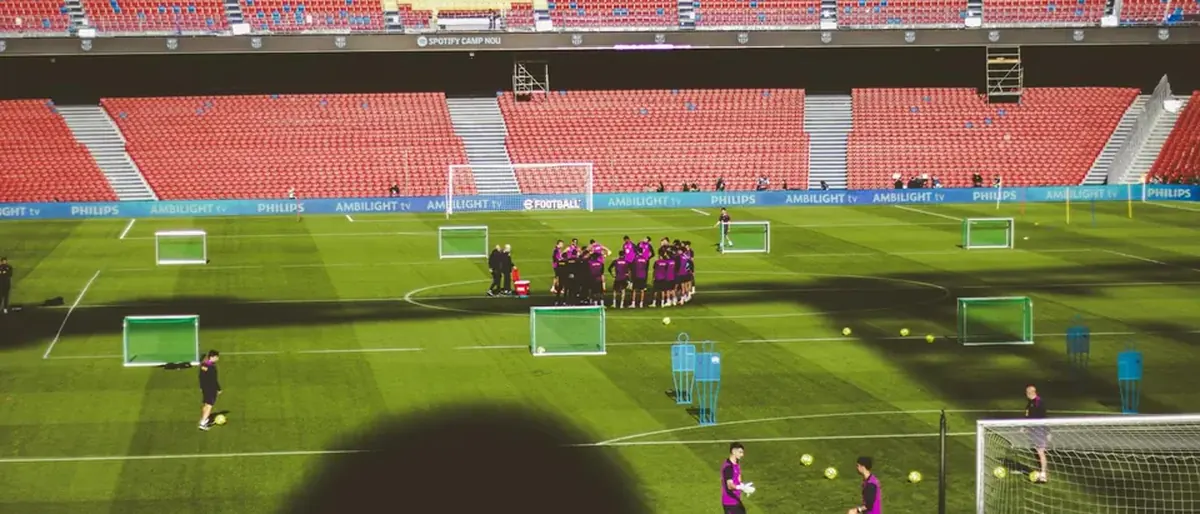
Under Daniel Farke, Leeds United have developed set pieces into a notable part of their attacking approach. In the 2025/26 Premier League campaign, dead-ball situations contribute to the club's goal tally—a tactical evolution that reflects Farke's pragmatic adaptation to top-flight survival football. This checklist breaks down the specific mechanisms, personnel, and routines that make Leeds dangerous from corners, free kicks, and throw-ins.
The Personnel Matrix: Who Does What
Farke's set-piece system relies on a clear division of labor. Not every player is a target; each has a defined role based on physical profile and technical ability.
| Role | Primary Player | Secondary Option | Key Attribute |
|---|---|---|---|
| Primary Taker (Corners) | Brenden Aaronson | Anton Stach | Delivery accuracy, curve |
| Primary Taker (Free Kicks) | Anton Stach | Brenden Aaronson | Power, dip trajectory |
| Aerial Target (Near Post) | Dominic Calvert-Lewin | Lukas Nmecha | Vertical leap, timing |
| Aerial Target (Far Post) | Ilya Gruev | Centre-back rotation | Positioning, second-ball awareness |
| Decoy Runner | Lukas Nmecha | Wingers | Speed, distraction |
| Zone Defender (Short Option) | Full-backs | Midfielders | Passing under pressure |
Source: Tactical analysis based on 2025/26 Premier League match footage and official club data.
Key insight: Calvert-Lewin's goal contributions include set-piece headers, making him a focal point of Farke's dead-ball strategy. His ability to win aerial duels against Premier League centre-backs—despite the step up from Championship—has been a critical factor.
Step 1: Identify the Defensive Weakness
Before any routine, Leeds' coaching staff analyzes the opposition's zonal or man-marking setup. The process follows a simple checklist:
- Man-marking teams: Target the far-post runner (Gruev or a centre-back) who can peel away from a marker.
- Zonal defenses: Attack the near-post area with Calvert-Lewin, forcing the goalkeeper to commit.
- Short corners: Only used when the opposition overloads the box with 6+ defenders, creating space 20 yards out for Stach's driven shots.
Step 2: Execute the Delivery Patterns
Aaronson and Stach have distinct delivery profiles, and Farke rotates them based on match context.
- Inswinging corners (Aaronson): Curved toward the goalkeeper, aiming for the 6-yard box. This suits Calvert-Lewin's near-post runs and forces defensive errors.
- Outswinging corners (Stach): Driven to the penalty spot, targeting Gruev or a centre-back making a back-post run. This is preferred when the opposition goalkeeper is aggressive in claiming crosses.
- Short free kicks (Stach): Low, driven passes to the edge of the box for a first-time shot—often used when Calvert-Lewin is double-marked.
Step 3: The Near-Post Decoy
The decoy runner (typically Nmecha) is a key element. His job is not to score but to create space.
- Movement: Sprint toward the near post, forcing the defender to follow or commit.
- Timing: Arrive just before Calvert-Lewin, drawing the goalkeeper's attention.
- Outcome: If the defender tracks, Calvert-Lewin has a free run at the ball. If the goalkeeper cheats, Nmecha can redirect the delivery.
Step 4: The Second-Phase Recovery
Farke's set-piece philosophy extends beyond the initial delivery. If the ball is cleared, Leeds have a structured recovery plan:
- Zone 1 (18-yard box): Three players (usually Calvert-Lewin, one centre-back, and a midfielder) stay to contest the second ball.
- Zone 2 (edge of the box): Two midfielders (Gruev and Stach) position themselves for a rebound shot.
- Zone 3 (midfield): Full-backs and the remaining midfielder hold positions to prevent counter-attacks.

Step 5: Adapt to Match Context
Farke adjusts set-piece intensity based on scoreline and time:
- Trailing (0-1): Increase box presence to 6 players, use Stach's outswinging deliveries for chaos.
- Drawing (0-0) after 70 minutes: Shift to short corners to maintain possession and create crossing angles.
- Leading (1-0): Reduce box players to 4, prioritize defensive shape. Use throw-ins as time-wasting opportunities.
Step 6: The Long Throw-In Variation
Unlike many Premier League teams, Leeds use throw-ins as set-piece opportunities. Full-backs are instructed to deliver long throws into the box when within 30 yards of goal.
- Target: Calvert-Lewin at the near post.
- Secondary option: Nmecha at the far post for a flick-on.
- Risk: Long throws leave the defense exposed if cleared—hence only used when the opposition has committed numbers forward.
The Training Ground Routine
Farke's set-piece success is rooted in repetition. According to club media reports, Leeds dedicate significant training time to dead-ball scenarios:
- Monday: Corner delivery patterns (Aaronson and Stach)
- Wednesday: Free-kick routines (Stach's driven shots)
- Friday: Throw-in variations and defensive set-piece drills
Common Mistakes to Avoid
- Overcommitting to the box: Leads to counter-attack vulnerability—a problem that plagued Leeds in the 2022/23 season.
- Predictable delivery: If Aaronson always aims for the near post, defenders adjust. Farke's rotation keeps opponents guessing.
- Ignoring the goalkeeper's positioning: Calvert-Lewin's runs are adjusted based on whether the keeper is aggressive or passive.
Conclusion: A Tactical Edge in the Survival Battle
Leeds United's set-piece efficiency under Farke is not accidental—it is a meticulously planned component of their Premier League survival strategy. With Calvert-Lewin as the aerial focal point, Aaronson and Stach as delivery specialists, and a structured recovery system, the club has turned dead balls into a reliable scoring method.
For a deeper comparison of how this season's set-piece approach differs from the 2020/21 survival campaign, see our analysis of the comparison with the 2020/21 survival season.
Final checklist for match day:
- Identify defensive setup (man-marking or zonal)
- Select delivery type (inswinging or outswinging)
- Execute decoy run (Nmecha)
- Target primary scorer (Calvert-Lewin)
- Recover to defensive shape if cleared
- Adapt based on scoreline and time